
About the Institute
  • English
  • Français
  • Español
  • Portuguese
  • Polish

Breadcrumb

  1. Home
  2. General Medicine
  3. Immunotherapies: a Phase II study confirms the benefit of combined FMT
  • Our publications
    • News
    • HCP Magazine
    • Thematic pages
    • Thematic folders
    • Overviews - Microbiota Magazine
  • About the Institute
    • About us
    • International Microbiota Observatory
    • Press room
    • Partnerships
  • Congresses
    • Congress calendar
    • Congress reviews
  • Continuing Medical Education
    • Accrediting courses
  • Useful documents
    • How to talk about
    • Infographics
    • Diagnosis tools
    • Patients Stories
    • Experts' point of view

    Join the microbiota community

    • Facebook
    • Twitter
    • LinkedIn
    • YouTube
    • Instagram
    • Bluesky

Lay public section

Find here your dedicated section

Gastroenterology
Gynecology
Pediatrics
General Medicine

Breadcrumb

  1. Home
  2. General Medicine
  3. Immunotherapies: a Phase II study confirms the benefit of combined FMT
General Medicine

Immunotherapies: a Phase II study confirms the benefit of combined FMT

Cancer
Oncology Pulmonology Dermatology

A new step in the evaluation of FMT to improve response to immunotherapies: a Phase II study confirms its effectiveness, with the transplant helping eliminate bacteria linked to poor treatment response. 1

Gastroenterology
Gynecology
Pediatrics
General Medicine
  • Our publications
    • News
    • HCP Magazine
    • Thematic pages
    • Thematic folders
    • Overviews - Microbiota Magazine
  • About the Institute
    • About us
    • International Microbiota Observatory
    • Press room
    • Partnerships
  • Congresses
    • Congress calendar
    • Congress reviews
  • Continuing Medical Education
    • Accrediting courses
  • Useful documents
    • How to talk about
    • Infographics
    • Diagnosis tools
    • Patients Stories
    • Experts' point of view

    Join the microbiota community

    • Facebook
    • Twitter
    • LinkedIn
    • YouTube
    • Instagram
    • Bluesky

Lay public section

Find here your dedicated section

Sources

This article is based on scientific information

Sharing is caring

Your colleagues might be interested in this topic. Why not share it?

  • Facebook
  • Twitter
  • LinkedIn
  • Mail
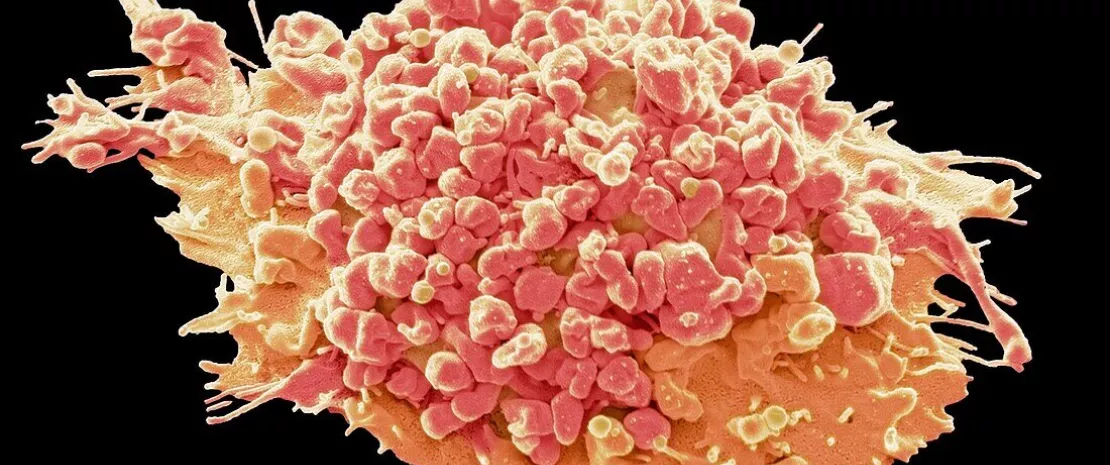
Photo: Immunotherapies: a Phase II study confirms the benefit of combined FMT

About this article

Created 13 May 2026
Updated 13 May 2026

(sidenote: Immune checkpoint inhibitors (ICIs) Therapies that seek to remove the mechanisms that inhibit the immune system’s response to cancer cells. Targeted checkpoints include Programmed Death-1 (PD-1), Programmed Death-Ligand 1 (PDL-1), and cytotoxic T-lymphocyte associated protein 4 (CTLA-4). Lifting these brakes allows the immune system to recognize and attack cancer cells.
 
)
(ICI) have improved the prognosis of non-small cell lung cancer (NSCLC) and cutaneous melanoma, but more than half of patients remain resistant.

14.11.2023 Immunotherapy coupled with FMT in patients with refractory melanoma: a Phase I trial Read more

Fecal microbiota transplant (FMT) could help overcome resistance to (sidenote: Anti-PD-1 immunotherapy based on immune checkpoint inhibitors that target the PD-1 checkpoint, reversing the deactivation by the tumor of the recognition system associated with the PD-1 protein present on the surface of T lymphocytes. The immune system’s effectiveness against tumor cells is thus restored. ) : successful mouse trials, two Phase I clinical trials providing initial proof of concept, then the MIMIC Phase I trial demonstrating the safety of FMT from healthy donors to reduce primary resistance to anti-PD-1 treatment in patients with cutaneous melanoma.

1st Lung cancer is the leading cause of cancer cases and deaths worldwide with an estimated 2.5 million new cases and 1.8 million deaths in 2022. ²

2 The 2 main types of lung cancer are non-small cell lung cancer (NSCLC), which accounts for around 85% of cases, and small cell lung cancer (SCLC), which is less common but typically more aggressive. ²

39-45% Patients with NSCLC are treated with single-agent anti-PD-1 such as pembrolizumab, with an expected objective response rate (ORR) of 39−45%. ¹

Confirmed efficacy in Phase II

Hence the interest in the multicenter Phase II FMT-LUMINate trial, evaluating FMT from healthy donors combined with anti-PD-1 monotherapy in NSCLC (n = 20) or with dual immunotherapy (anti-PD-1 + (sidenote: Anti-CTLA-4 immune checkpoint inhibitor that targets the CTLA-4 checkpoint ) ) in cutaneous melanoma (n = 20). Eligible patients received one dose of FMT before immunotherapy. Ten healthy volunteer donors (10 in the NSCLC cohort, 6 in the melanoma cohort) provided stool samples.

The results demonstrate the clinical efficacy of FMT:

  • for NSCLC, combined with anti-PD-1 therapy, the (sidenote: Objective response rate (ORR) Proportion of responding patients (who showed a complete or partial response), as opposed to patients with stable disease or disease progression. ) was 80% (16 of 20 patients), exceeding the predefined primary objective of 64%. Without FMT, ORR ranges from 39 to 45%.
  • for melanoma, combined with anti-PD-1 and anti-CTLA-4, ORR was 75% (15/20) vs. 50–58% without FMT.

The disappearance of harmful bacteria

After FMT, patients’ gut microbiota was modified, without strong similarity to the donor. More importantly, the authors show that the clinical response is not related to the acquisition of new bacteria from the donor; it depends mainly on the disappearance of bacteria present in the patient before treatment, including species such as Enterocloster citroniae, E. lavalensis and Clostridium innocuum. Enterocloster and Clostridium spp. are known to be associated with poor response to immunotherapy and sometimes with unfavorable inflammatory profiles.

This loss of certain bacteria changes microbial metabolism, reducing tryptophan pathways involved in immunosuppression, and creates a more favorable immune environment with more cytotoxic T cells and fewer regulatory cells.

17th Skin melanoma is the 17th most common cancer and the 22nd leading cause of cancer death worldwide, with an estimated 332,000 new cases and 59,000 deaths in 2022. ³

50−58% In patients with melanoma, dual therapy with ipilimumab (anti-CTLA-4) in combination with nivolumab (anti-PD-1) is among the most commonly used frontline regimens, yielding an ORR of 50−58%. ¹

Safety assessment of FMT

In terms of safety, FMT was well tolerated in patients with NSCLC receiving anti-PD-1, with no adverse events of grade ≥3.

However, in the melanoma cohort receiving dual immunotherapy, adverse events were observed in 65% of patients, as well as a higher-than-expected rate of myocarditis in those who received FMT from a donor whose microbiota was enriched with Prevotella, including (sidenote: Segatella copri Segatella copri: formerly named Prevotella copri clade A., P. copri is not a single homogeneous species but a complex made up of 4 distinct genetic lineages (clades A, B, C, and D) with strong functional diversity. These lineages are often found together in non-Westernized populations (presence of all 4 clades, sometimes except D) but are much less frequent in Westernized populations (presence of A and B, A, or none). The decline of P. copri in Western-lifestyle populations may be linked to lifestyle and dietary changes associated with modernization. Source: Tett A, Huang KD, Asnicar F et al. The Prevotella copri Complex Comprises Four Distinct Clades Underrepresented in Westernized Populations. Cell Host Microbe. 2019 Nov 13;26(5):666-679.e7. ) . These adverse events were not seen in NSCLC patients treated with anti-PD-1 alone and receiving FMT from the same donor. This suggests an interaction between microbial taxa (involving Prevotella) and the type of immunotherapy (dual PD-1/CTLA-4).

Another lesson can thus be drawn from the study: selecting healthy donors is essential and remains to be defined.

Sources

1. Duttagupta S, Messaoudene M, Hunter S et al. Fecal microbiota transplantation plus immunotherapy in non-small cell lung cancer and melanoma: the phase 2 FMT-LUMINate trial. Nat Med. 2026 Jan 28.

2. Lung cancer, World Health Organization.

3. Global Cancer Observatory.

Tags
Immunotherapy Fecal Microbiota Transplantation Oncology Cancer Skin microbiota Lungs Microbiome Flora

    See also

    Melanoma: fecal microbiota transplant to overcome resistance to anti–PD-1?
    Immune checkpoint inhibitor (ICI) efficacy: the right dose of bacteria Immune checkpoint inhibitor (ICI) efficacy: the right dose of bacteria
    Created 13 May 2026
    Updated 13 May 2026

    About this article

    To know more about this topic.

    Main topic

    Cancer

    Medical practice

    Oncology Pulmonology Dermatology

    Content type

    News
    General Medicine

    Infographics to share with your patients!

    Download original and engaging graphic materials to explain to your patients the essential role of the micr...

    Find out more

    Antimicrobial resistance fresco: learn, play and act now

    The Antimicrobial resistance fresco is an interactive and educational experience that raises awareness abou...

    Find out more

    Probiotics: what exactly are we talking about?

    From the Latin pro and Greek bios meaning “for life”, the term “probiotic” was suggested over 60 years ago,...

    Find out more

    Diagnosis tools

    Quickly identify Irritable Bowel Syndrome (IBS) or Functional Dyspepsia (FD) with our clinical checklists, ...

    Find out more

    Pr. Maslennikov (Russian winner 2019): Probiotics & cirrhosis

    To celebrate #WorldMicrobiomeDay, Biocodex Microbiota Institute is handing the floor to national grant winn...

    Find out more

    How do you choose a probiotic for your patient?

    Faced with a plethora of products on the market, it's not always easy for health professionals to suggest a...

    Find out more

    Continue reading

    News
    Photo HCPs: AMR page for the 2025 WAAW campaign
    08.10.2025

    Everything you need to know about antibiotics and antimicrobial resistance

    Read the article
    08.01.2024

    When travel breeds antibiotic resistance

    Read the article
    26.10.2023

    Can antibiotics promote the growth of harmful bacteria in the gut?

    Read the article
    28.08.2024

    Precision molecule against Gram-negative infections: a new era of antibiotics that spare the gut microbiota

    Read the article
    21.02.2022

    Phage therapy for multidrug-resistant infections?

    Read the article
    25.10.2024

    Antibiotic resistance: discovery of a million antimicrobial peptides

    Read the article
    12.11.2024

    Human microbiomes: reservoirs of antimicrobial peptides

    Read the article
    Everything you need to know about Microbiota & Dysbiosis
    27.07.2022

    Everything you need to know about Dysbiosis

    Read the article
    • Our publications
      • News
      • HCP Magazine
      • Thematic pages
      • Thematic folders
      • Overviews - Microbiota Magazine
    • About the Institute
      • About us
      • International Microbiota Observatory
      • Press room
      • Partnerships
    • Congresses
      • Congress calendar
      • Congress reviews
    • Continuing Medical Education
      • Accrediting courses
    • Useful documents
      • How to talk about
      • Infographics
      • Diagnosis tools
      • Patients Stories
      • Experts' point of view

      Join the microbiota community

      • Facebook
      • Twitter
      • LinkedIn
      • YouTube
      • Instagram
      • Bluesky

    Lay public section

    Find here your dedicated section
    Gastroenterology
    Gynecology
    Pediatrics
    General Medicine
    • English
    • Français
    • Español
    • Portuguese
    • Polish

    Browse the site

    • Our publications
      • News
      • HCP Magazine
      • Thematic pages
      • Thematic folders
      • Overviews - Microbiota Magazine
    • About the Institute
      • About us
      • International Microbiota Observatory
      • Press room
      • Partnerships
    • Congresses
      • Congress calendar
      • Congress reviews
    • Continuing Medical Education
      • Accrediting courses
    • Useful documents
      • How to talk about
      • Infographics
      • Diagnosis tools
      • Patients Stories
      • Experts' point of view

      Join the microbiota community

      • Facebook
      • Twitter
      • LinkedIn
      • YouTube
      • Instagram
      • Bluesky

    Lay public section

    Find here your dedicated section

    Discover

    Gastroenterology
    Gynecology
    Pediatrics
    General Medicine

    Join the microbiota community

    • Facebook
    • Twitter
    • LinkedIn
    • YouTube
    • Instagram
    • Bluesky

    Lay public section

    Find here your dedicated section

    Redirection

    You are about to be redirected and leave our website

    • Be redirected
    • Stay on the Biocodex Microbiota Institute's website

    Stay with us !

    Join the Microbiota Community of HCPs and researchers and receive “Microbiota Digest” and "HCP Magazine" to stay up to date on the latest news about microbiota.

    * Mandatory Fields

    BMI 20-35

    Explore

    Photo: Immunotherapies: a Phase II study confirms the benefit of combined FMT
    13.05.2026

    Immunotherapies: a Phase II study confirms the benefit of combined FMT

    Read the article
    04.05.2026

    Bifidobacteria: early allies against allergic risk?

    Read the article
    Actu PRO : Un catalogue des gènes du microbiote vaginal
    21.04.2026

    Vaginal microbiota #24

    Read the article

    Stay updated

    Join the Microbiota Community of HCPs and researchers and receive “Microbiota Digest” and "HCP Magazine" to stay up to date on the latest news about microbiota.

    * Mandatory Fields

    BMI 20-35

    • Our publications
      • News
      • HCP Magazine
      • Thematic pages
      • Thematic folders
      • Overviews - Microbiota Magazine
    • About the Institute
      • About us
      • International Microbiota Observatory
      • Press room
      • Partnerships
    • Congresses
      • Congress calendar
      • Congress reviews
    • Continuing Medical Education
      • Accrediting courses
    • Useful documents
      • How to talk about
      • Infographics
      • Diagnosis tools
      • Patients Stories
      • Experts' point of view

      Join the microbiota community

      • Facebook
      • Twitter
      • LinkedIn
      • YouTube
      • Instagram
      • Bluesky

    Lay public section

    Find here your dedicated section

    Discover

    Gastroenterology
    Gynecology
    Pediatrics
    General Medicine

    Lay public section

    Find here your dedicated section

    Join the microbiota community

    • Facebook
    • Twitter
    • LinkedIn
    • YouTube
    • Instagram
    • Bluesky

    © 2026 Biocodex. All rights reserved.

    • Legal notice
    • GTU
    • Data protection policy
    • Sitemap
    • Cookies settings
    • Digital accessibility : partially compliant
    Biocodex logo