

Alcoholism: Can gut bacteria reduce its effects on the brain?
Alcoholism appears to disrupt the blood-brain barrier via the gut-brain axis. The gut bacterium Faecalibacterium prausnitzii may mitigate these effects and alcohol-induced cognitive impairment.
Lay public section
Find here your dedicated section
About this article
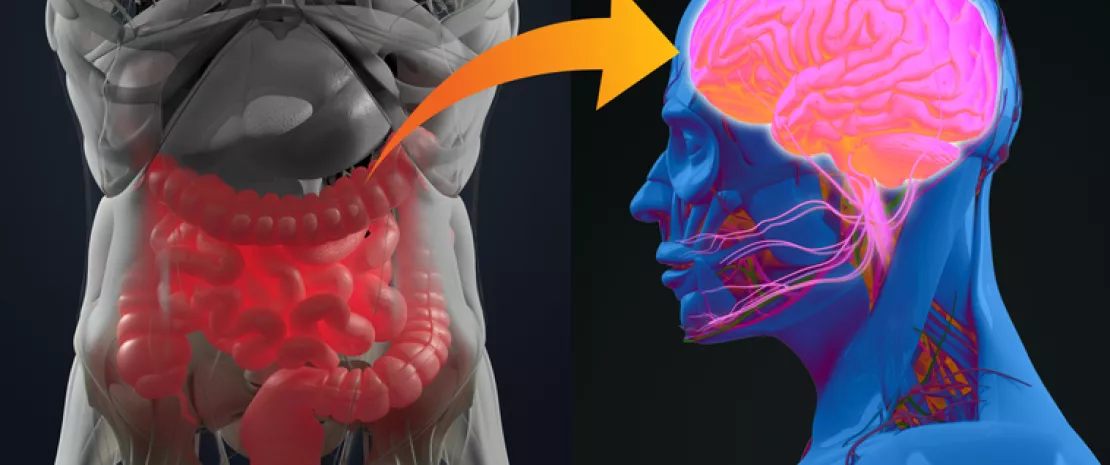
Ethanol, which can cross the blood-brain barrier (BBB), can damage the central nervous system. But it could also alter this barrier that protects our brain. A pathological process in which the gut-brain axis is involved, according to research published at the end of 2025 1.
The flora of alcoholics
Researchers analyzed the gut microbiota of 30 men who had suffered from alcohol use disorder (AUD) for years, and 30 control subjects. Compared to the control subjects, men with AUD showed cognitive impairment and signs of anxiety, depression, and sleep disorders. Their gut microbiota showed no significant differences in terms of abundance and diversity. However, the composition of their flora was specific: alcohol use disorder was associated with a decrease in Faecalibacterium and an increase in Streptococcus, a bacterium associated with inflammation.
Microbial metabolites present in plasma are also disrupted in cases of AUD: 604 metabolites were overexpressed (particularly in pathways related to lipid metabolism, amino acid metabolism, and bile acid secretion) and 606 were underexpressed. These variations were linked to the abundance of certain bacteria, such as Faecalibacterium.

Alcohol or fecal transplantation, same consequences in mice
The authors also show that chronic alcohol consumption leads to cognitive decline and BBB impairment in mice, with the appearance of leaks in the prefrontal cortex and hippocampus and a decrease in the expression of tight junction proteins in endothelial cells.
But above all, a simple fecal transplant from patients with AUD to axenic mice is enough to cause the same effects.The alteration of the gut microbiota caused by alcohol would therefore be partly responsible for the disruption of the BBB.
- Harmful alcohol consumption is defined, particularly in Anglo-Saxon countries, as more than 3 drinks per day or 7 per week for women, and more than 4 drinks per day or 14 per week for men 2.
- It is estimated that 400 million people, or 7% of the global population aged 15 and older, had alcohol use disorders in 2019. Of these, 209 million people (3.7% of the global adult population) were dependent on alcohol 3.
The restorative effect of Faecalibacterium prausnitzi
Since Faecalibacterium is less abundant in AUD patients, researchers tested whether F. prausnitzii could protect mice from brain disorders caused by chronic alcohol consumption. And indeed it does: cognitive function is improved, BBB leakage is reduced, and junction proteins are boosted.
Physiologically, F. prausnitzii led to a significant increase in certain short-chain fatty acids (butyric acid, valeric acid, and caproic acid) known for their anti-inflammatory effects. It therefore appears that this bacterium can protect the BBB from ethanol damage through the action of beneficial bacterial metabolites.
Binge drinking: alcohol-related gut dysbiosis may contribute to addiction
See also


