2026: What women know (and don't know) about their vaginal microbiota International Microbiota Observatory
For the fourth year running, the Biocodex Microbiota Institute has commissioned Ipsos to conduct a major international survey on microbiota: the International Microbiota Observatory. This large survey was conducted by Ipsos among 7,500 people in 11 countries (the USA, Brazil, Mexico, France, Germany, Italy, Portugal, Poland, Finland, China and Vietnam).
Vaginal microbiota is essential for women's health. But how well do women understand it? What behaviors do they adopt to preserve it? What guidance do they receive from healthcare professionals?
Findings from this fourth edition show rising awareness of the vaginal microbiota; however, understanding of how it functions has not advanced significantly. Guidance from healthcare professionals remains limited. Strengthening and expanding this guidance is critical to empower women to adopt practices that support a microbiota‑friendly lifestyle.
1. Vaginal microbiota is becoming more familiar, but still not fully understood
The recognition of the vaginal microbiota among women is still on a positive trajectory: 56% are aware of the vaginal microbiome, an increase of 2 points since 2025.

However, only a small minority know precisely what it is. Currently, one in five women claim to have a precise understanding of it (23%). This in-depth awareness is consistent with the previous year, showing a slight decrease of 1 point compared to 2025. While the trend is encouraging, it appears that the depth of knowledge is still lacking.
Women's understanding remains robust on several key aspects:
are aware of the adverse effects of antibiotics on the vaginal microbiota
(-3 points vs. 2025)
recognize the risk of vaginal dryness due to an imbalanced microbiota
(-2 points vs. 2025)
are aware that the vaginal microbiota is different for each woman
(-2 points vs. 2025)

Awareness in certain areas hasn’t improved and remains limited. Over half of women understand that the vaginal microbiota undergoes changes throughout a woman's lifetime (56%, a 4-point drop since 2025). Additionally, 57% are aware of the vagina self-cleaning function (-1 point vs. 2025).
There are still notable knowledge gaps when it comes to understanding factors impacting the vaginal microbiota, and once again no progress has been made over the past year.
Only 50% of the women surveyed acknowledge that smoking can affect their vaginal microbiota and this awareness has dropped by 5 points since 2025. Moreover, only 45% of women are aware of the connection between the gut microbiota and vaginal microbiota, a figure that remains unchanged since 2025.
Finally, Only 37% are aware of the impact of childbirth (vaginally or cesarean section) on newborn’s gut microbiota, reflecting a decrease of 4 points since 2025.
Learn all about microbiota
Find out more!
2. Vaginal microbiota‑supportive behaviors: partial uptake; harmful practices persist
While certain protective behaviors are well integrated into women's daily habits, others remain under-adopted, and practices that negatively affect vaginal microbiota persist.
Some beneficial behaviors that are adopted
wear cotton underwear regularly
(-10 points vs. 2025)
avoid using deodorants or hygiene sprays on their intimate areas
(XX points vs. 2025)
of women use soap-free cleansing solutions
(-12 points vs. 2025)
Furthermore, certain harmful practices are still going on
- Vaginal douching is still practiced by more than one-quarter of women (28%);
- The practice of sleeping with underwear several times a week seems to be more common, with 68% of women doing so (+13 points vs. 2025);
- And more than half of women (58%) tend to wash their body two or more times a day at least weekly, which can be detrimental to vaginal microbiota health;
- More than half (56%) opt for self-medication when experiencing irritation, itching, or burning sensations rather than consulting a healthcare professional.

Female anatomy, microbiotas and intimate hygiene
Learn more
3. Women want answers about their vaginal microbiota, but too few receive practical advice
Healthcare professional guidance remains too limited, most women received little information from their healthcare professionals.
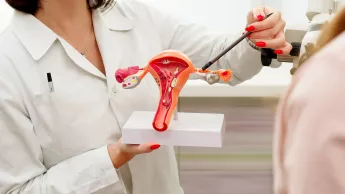
Only 36% of women recall receiving an explanation about the vaginal microbiota, its role, and functions (-1 point vs. 2025).

Only 40% were educated on the importance of maintaining microbiota balance and a same proportion received practical guidance on the matter, reflecting 2 points decrease since 2025.
Furthermore, the impact of intimate hygiene products and other products such as sanitary pads, menstrual cups on the vaginal microbiota is discussed with fewer than half (47% and 42% respectively).
There is still a pressing need for better patient education and communication in all these areas. Besides, the demand for information is unequivocal. An overwhelming 86% of women wish to receive more guidance from their healthcare providers about the vaginal microbiota and its health implications (+1 points vs. 2025).
However, some women acknowledge that discussing intimate health issues with healthcare professionals can be challenging. Two women in five do not find easy to speak about sexual discomforts with healthcare professionals (41%), 31% to discuss vaginal dryness and a quarter to address urinary or yeast infections (23%).

How to keep a healthy microbiota?
Learn more
4. Age is a key influence in understanding and protecting vaginal microbiota
This year again, women aged 60 and above are the least informed and aware about the vaginal microbiota. However, these older women still adopt protective behaviors for their vaginal microbiota. Awareness remains notably lower among older women:
of those aged 60 and above know exactly what the vaginal microbiota is
(vs. 23% of all women)
only half of women over 60 are aware that the vagina is self-cleaning
(vs. 57% of all women)
are aware that smoking can affect the vaginal microbiota
(vs. 50% of all women)
Moreover, this age group shows lower awareness of the potential impact of microbiota imbalance on STIs (62% vs. 67%), fertility (44% vs. 53%), risk of miscarriage and pregnancy complications (39% vs. 49%), and risk of preterm birth (35% vs. 45%).
Yet, among women aged 60 and older, awareness of some key topics is relatively high:
know that antibiotics can disrupt the vaginal microbiota
(vs. 60% of younger women)
recognize that each woman’s vaginal microbiota is unique
(vs. 64% of all women)
understand that it changes from childhood through menopause
(vs. 56% of all women)
Women aged 60 and more report adopting key behaviors that are beneficial for their vaginal microbiota.
- A higher proportion regularly wear cotton underwear (80% vs. 74% overall);
- They avoid using deodorants in intimate areas (77% vs. 69%);
- The majority also refrain from vaginal douching (61% vs. 56% of all women).
However, some practices are not consistently better than average:
- Only 46% use a soap-free cleansing solution for intimate care several times a week (vs. 44% overall);
- And 28% wash their body several times a day— a habit that can disrupt the vaginal microbiota balance (vs. 25% overall).

Microbiota changes in senior woman
Learn moreYoung women: still a stronger awareness of the vaginal microbiota however, it does not consistently translate into microbiota-friendly behaviors. It underscores the need to translate awareness into sustained, health-supporting habits to maintain the balance of the vaginal microbiota.
Awareness of some key topics is relatively high. Women aged 25 to 34 are more likely (31%) to know precisely what the vaginal microbiota is, compared to only 23% among all women. They are more aware of the vagina self-cleaning capacity (61% vs. 57% among all) and better understand the impact of delivery methods on a newborn’s gut microbiota (44% vs. 37%).

Additionally, these women are more informed about the impact of imbalanced microbiota on fertility (58% vs. 53%) and the risks of miscarriage or complicated pregnancies (53% vs. 49%).
However, notable gaps remain: while a majority know that the vaginal microbiota acts as a barrier against pathogenic microorganisms, awareness is lower than average (60% vs. 64%), and the same share understand that antibiotics can disrupt the vaginal microbiota, again below the overall average (60% vs. 69%).
Women aged 25 to 34 report receiving more information from healthcare professionals than other women.

They have been more educated on the importance of maintaining a balanced vaginal microbiota (48% vs. 40% among all), on the beneficial behaviors needed to maintain this balance (49% vs. 40%).
They also more frequently recall that HCPs provided guidance on intimate hygiene practices (53% vs. 47% among all), warned them about the effects of intimate hygiene products (53% vs. 47%), and other hygiene products such as sanitary pads, menstrual cups (48% vs. 42%) on the vaginal microbiota. While better than average, these levels remain only moderate, with roughly half of women receiving such guidance.


Methodology
This fourth edition of the International Microbiota Observatory was conducted by Ipsos on 7,500 individuals across 11 countries (France, Portugal, Poland, Finland, Italy, Germany, the USA, Brazil, Mexico, China, and Vietnam). The countries surveyed are the same as in the previous wave.
The survey was conducted over the Internet between February 3 and Mars 13, 2026. For each country, the sample is representative of the population aged 18 and over in terms of :
- gender
- age
- profession
- region
Representativeness was ensured via quota sampling, the most commonly used sampling method for obtaining a representative sample of the population studied. The quota variables for each country were gender, age, region, and socio-professional category. The data were adjusted:
- within each country, again to ensure that each population is representative
- globally, so that each country has the same weight. Statistical analyses were carried out using Cosi software (M.L.I., France, 1994), with a significance level of 95%
The survey population was 48% male and 52% female. The sample of 7,500 individuals made it possible to carry out a detailed analysis by age group:
- 18-24
- 25-34
- 35-44
- 45-59
- 60 and over
The changes shown are year-over-year, that is, compared to the 3rd edition of the Observatory conducted in 2025. Changes relative to previous editions—the first and second editions—are shown on a constant scope basis, meaning they were calculated by considering only those countries included in all waves of the survey (namely the United States, Brazil, Mexico, France, Portugal, and China). Other countries, which were included in the Observatory’s second or third editions, are not included in the results presented on a constant scope basis.
The questionnaire includes 24 questions on:
- socio-demographic data
- the level of knowledge about microbiomes
- the level of and desire for information from healthcare professionals
- the level of knowledge and information among parents and pregnant women regarding a child’s microbiome
- the identification and adoption of behaviors designed to combat microbiome imbalances
- the level of knowledge, information, and behaviors of women about the vulvo-vaginal microbiome
- health data
The questionnaire lasted ten minutes and the 7,500 individuals had to complete the entire questionnaire in order to be included in the survey. The terms used in the questionnaire to talk about the microbiome have been translated and adapted to the terms used in each country.


BMI-26.44