Portugal 2026: knowledge and behaviors about microbiota
The survey was conducted by Ipsos among 7,500 people in 11 countries (France, Portugal, Poland, Finland, Italy, Germany, United States, Mexico, Brazil China, and Vietnam).
Portugal and microbiota:
low awareness but microbiota education provided by HCPs is slowly improving.
Summarizing Portugal's results in the survey
In 2026, Portugal confirms a pattern that has characterized the country across all editions: microbiota awareness lags behind most European peers, but the trajectory is gradually improving. HCP education, though still limited in absolute terms, is the one indicator moving in the right direction: 20% of Portuguese respondents received all key information, close to the global average and significantly above France and Germany (+ 1 points vs. 2025). Behaviors are reaching the global average for the first time.
1. The Portuguese show low but improving awareness of the term microbiota
2 in 3 Portuguese respondents have heard of the microbiota, a rate below both the European average (70%) and the global average (72%). While this represents incremental progress compared to previous years, Portugal consistently trails behind the broader European field and lags significantly on depth of knowledge.
of Portuguese respondents have already heard of the term microbiota
(vs. 77% globally)
1 in 5 of them know exactly what the microbiota is
(vs. 24% globally)
of them have heard of all 7 specific microbiotas
(vs. 32% globally)
An awareness rate that mirrors the European pattern
Like most European countries, in Portugal respondents show a gut-centric awareness profile. All other microbiotas are recognized at rates below the global average:
- 54% are aware of the gut microbiota (vs. 63% globally);
- 43% are aware of the vaginal microbiota, below the global average (51%);
- 41% are aware of the skin microbiota, (vs. 50% globally);
- 37% are aware of the lung microbiota, below global average (44%).
Learn all about microbiota
Learn moreKnowledge near the global average with specific gaps
Portuguese respondents score 5.5/9 on average on specific knowledge questions, slightly above the global average of 5.4. The foundations are solid, but some critical gaps persist:
- 82% know diet has significant consequences on microbiota balance;
- 81% know microbiota imbalance can have significant health consequences;
- 73% know antibiotics have an impact on the microbiota.
But as in most countries, gaps appear on more specific topics:

2. Strong microbiota-friendly dietary habits and more behavioral changes keep being adopted by the Portuguese
50% of Portuguese respondents have changed their behaviors to protect their microbiota, up from 49% in 2025 and 47% in 2024. For the first time, Portugal is reaching the global average (53%). This improvement is encouraging, even if specific behavioral habits still show significant gaps.
of the Portuguese have changed behaviors to protect their microbiota
(vs. 53% globally)
more than half consider their gut microbiota well balance
(vs. 59% globally)
of them eat fruits and vegetables daily
(vs. 40% globally)
The Portuguese show microbiota-friendly dietary habits
Portugal stands out positively on certain dietary behaviors, particularly fruit and vegetable intake. But microbiota-specific supplementation habits remain underdeveloped:

57% of Portuguese report consuming multiple fruits and vegetables daily (vs. 40% globally), and not drinking alcohol frequently or never (78% vs. 85% globally).
Some habits could be strengthened
Despite solid foundations, microbiota-targeted supplementation and lifestyle could be improved:

Only 41% of the Portuguese say they consume fermented foods regularly (vs. 67% globally), and 68% say they engage in physical activity at least weekly (vs. 73% overall).

When it comes to supplementation, 34% of Portuguese respondents consume probiotics and 28% consume prebiotics—both below global averages of 42% and 38%, respectively.
What is the difference between prebiotics, probiotics and postbiotics?
Find out more
What women know(and don't know) about their vaginal microbiota
Discover more
3. Highly trusted HCPs providing more microbiota education and actively prescribing probiotics
Trust in healthcare professionals in Portugal is near-absolute: 98% of respondents, rising to 100% among those aged 60 and over, cite HCPs as their most trusted source of microbiota information. This trust is universal across all demographics and age groups. What distinguishes Portugal from its European neighbors is not the trust, but what happens next.
of Portuguese respondents cite HCPs as one of their primary sources on microbiota information
(vs. 94% globally)
received all key microbiota information from their HCP
(vs. 23% globally)
of them received an explanation of what the microbiota is
(vs. 39% globally)
HCPs in Portugal show consistent improvement in educating patients
Unlike France and Germany, where HCP-transmitted information is declining, Portugal shows a gradual upward trend. The improvement is modest but consistent across three consecutive years:

43% of Portuguese respondents received guidance on microbiota-friendly behaviors to adopt (+3 points vs. 2025). 41% were educated on the importance of preserving microbiota balance (+5 points vs. 2024). And 35% received an explanation of what the microbiota is (+1 point vs. 2025).
This information is distributed evenly across demographics, unlike in many countries where younger patients receive more. In Portugal, the quality of HCP communication does not vary significantly by age, which is a notable positive feature.
Probiotic prescriptions are rising sharply
One of the most striking developments in Portugal in 2026 is the sharp increase in probiotic and prebiotic prescriptions:
- 43% of respondents were prescribed probiotics or prebiotics (+11 points since 2023);
- Only 19% received all key microbiota information from their HCP when antibiotics were prescribed (vs. 25% globally);
- 28% were co-prescribed probiotics with antibiotics (vs. 38% globally).
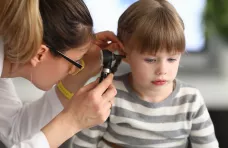
Antibiotics: what impact on the microbiota and on our health?
Learn more
4. The first 1,000 days: a concept still largely unknown among Portuguese parents
The first 1,000 days focus reveals room for growth in parental education in Portugal. About 1 in 3 of Portuguese parents and pregnant women have heard of the concept (below the global average of 43%). Even more striking, only 23% of parents received all key information from their pediatrician (vs. 31% globally).
of Portuguese parents/pregnant women are aware of the first 1,000 days concept
(vs. 43% globally)
of them claimed to know exactly what it means
(vs. 15% globally)
said to have received information on early microbiota development by an HCP
(vs. 39% globally)
Significant misconceptions among Portuguese parents
- 11% of parents know that the baby's microbiota does not start developing inside the mother's womb, on par with the global average;
- 84% don't know that by age 5 the gut microbiota is not yet adult-like (vs. 71% globally);
- 36% don't know the impact of early antibiotic use on infant gut microbiota development, slightly higher than the global average of 35%;
- Only 38% know that pet exposure during early life influences the gut microbiota.
In Portugal, there's high trust in healthcare professionals. Nevertheless, HCPs don't seen to be very active in education patients on microbiota, although they are increasingly prescribing probiotics. When it comes to the first 1000 days, Portuguese parents receive less information than other European countries, revealing another opportunity for microbiota education.



Methodology
This fourth edition of the International Microbiota Observatory was conducted by Ipsos on 7,500 individuals across 11 countries (France, Portugal, Poland, Finland, Italy, Germany, the USA, Brazil, Mexico, China, and Vietnam). The countries surveyed are the same as in the previous wave.
The survey was conducted over the Internet between February 3 and Mars 13, 2026. For each country, the sample is representative of the population aged 18 and over in terms of :
- gender
- age
- profession
- region
Representativeness was ensured via quota sampling, the most commonly used sampling method for obtaining a representative sample of the population studied. The quota variables for each country were gender, age, region, and socio-professional category. The data were adjusted:
- within each country, again to ensure that each population is representative
- globally, so that each country has the same weight. Statistical analyses were carried out using Cosi software (M.L.I., France, 1994), with a significance level of 95%
The survey population was 48% male and 52% female. The sample of 7,500 individuals made it possible to carry out a detailed analysis by age group:
- 18-24
- 25-34
- 35-44
- 45-59
- 60 and over
The changes shown are year-over-year, that is, compared to the 3rd edition of the Observatory conducted in 2025. Changes relative to previous editions—the first and second editions—are shown on a constant scope basis, meaning they were calculated by considering only those countries included in all waves of the survey (namely the United States, Brazil, Mexico, France, Portugal, and China). Other countries, which were included in the Observatory’s second or third editions, are not included in the results presented on a constant scope basis.
The questionnaire includes 24 questions on:
- socio-demographic data
- the level of knowledge about microbiomes
- the level of and desire for information from healthcare professionals
- the level of knowledge and information among parents and pregnant women regarding a child’s microbiome
- the identification and adoption of behaviors designed to combat microbiome imbalances
- the level of knowledge, information, and behaviors of women about the vulvo-vaginal microbiome
- health data
The questionnaire lasted ten minutes and the 7,500 individuals had to complete the entire questionnaire in order to be included in the survey. The terms used in the questionnaire to talk about the microbiome have been translated and adapted to the terms used in each country.