China 2026: knowledge and behaviors about microbiota
The survey was conducted by Ipsos among 7,500 people in 11 countries (France, Portugal, Poland, Finland, Italy, Germany, United States, Mexico, Brazil China, and Vietnam).
China and microbiota: stable awareness but solid understanding, with strong HCP engagement and high rate of behavioral change.
Summarizing China's results in the survey
In 2026, China presents one of the strongest overall profiles in the study. After significant awareness growth in previous years, microbiota awareness has stabilized at 68%. But what distinguishes China is the quality of the engagement that sits behind this figure: strong behavioral change, active HCP education, and solid information of early microbiota development.
1. Stable awareness of microbiota but solid understanding on key mechanisms
In 2025, 68% of Chinese respondents have heard of the term microbiota, a stabilization after years of strong growth (vs. 57% in 2023). Only 14% say they know exactly what it is, below the global average of 24%. But this figure alone does not capture the quality of Chinese respondents’ understanding. When tested on specific mechanisms, China consistently performs above average.
of Chinese people have already heard of the term microbiota
(stable vs. 2025)
1 in 8 of them know exactly what the microbiota is
(vs. 24% globally)
are aware of
the gut microbiota
(vs. 23% globally)
A broad and diversified microbiota awareness
China’s awareness extends significantly beyond the gut, reflecting a healthcare system that discusses multiple microbiota types in clinical settings:
- 62% of respondents are aware of the oral microbiota (vs. 52% globally)
- About 55% claimed to know the skin microbiota (vs. 50% globally);
- 53% are aware of the vaginal microbiota, above global average (51%);
- Almost half know both the lung and urinary microbiotas, above global averages
Learn all about microbiota
Learn moreWhere China outperforms on understanding
Several specific knowledge results are notably above the global average, confirming that Chinese respondents have received more targeted microbiota education than the awareness figure alone would suggest:
- 81% know diet has consequences on microbiota balance (vs. 79% globally);
- 76% correctly link IBS, obesity, and vaginosis to the microbiota (vs. 68% globally);
- Only 37% of Chinese respondents don't know that the microbiota is not located exclusively in the gut. This is one of the most accurate scores in the study (vs. 51% globally).
Gaps remain on complex topics, though China performs better than average:
2. High rate of behavioral change, driven by microbiota-friendly habits
In 2026, 61% of Chinese respondents report adopting lifestyle changes to protect their microbiota (8 points above the global average of 53%). This reflects a broader pattern of microbiota-friendly habits that are deeply embedded in daily life in China. China’s behavioral profile is remarkable for its consistency: across almost every measured habit, results are above or equal to the global average.
of Chinese respondents have changed behaviors to protect their microbiota
(vs. 53% globally)
of them consume probiotics at least monthly
(highest globally)
of them consume prebiotics at least monthly
(highest globally)
Diet and lifestyle strengths
Chinese respondents show consistently strong results in terms of diet and lifestyle behaviors:

69% of respondents do not smoke: one of the highest rates globally (vs. 52% overall) and 79% claimed to engage in physical activity weekly (vs. 73% globally)

3 in 4 say they consume fermented foods regularly (73% vs. 67% globally), and the same number (75%) consider their gut microbiota is well balanced. This is the highest rate globally
One area of attention: vaginal hygiene habits
One behavioral pattern stands out as requiring attention: only 18% of Chinese women never practice vaginal douching, a practice that can disrupt the vaginal microbiota. This is significantly below the global average of 56% and the lowest rate in the study. It suggests a strong cultural hygiene norm that may need specific, targeted education around its microbiota impact.

How to keep a healthy microbiota?
Find out more...
What women know(and don't know) about their vaginal microbiota
Discover more
3. Chinese HCPs are among the most active educators on microbiota
Chinese healthcare professionals share information about the microbiota at rates that are well above global averages, and significantly higher than European rates. 90% of Chinese respondents trust HCPs as one of their primary sources of microbiota information, and unlike in Europe, this trust is matched by genuine information delivery.
of Chinese respondents trust HCPs as one of their primary sources on microbiota information
(vs. 94% globally)
of them received an explanation of what the microbiota is
(vs. 39% globally)
received all key microbiota information from their HCP
(vs. 23% globally)
A comprehensive educational footprint
On every measure of HCP-transmitted education, China significantly outperforms the global average and leads Europe by a wide margin.

57% of respondents were educated on the importance of preserving their microbiota balance (vs. 43% globally). Similarly, 56% received guidance on behaviors to adopt (vs. 43% globally). And 2 in 3 were prescribed probiotics or prebiotics by their HCPs (vs. 51% globally).
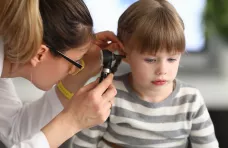
Antibiotics: what impact on the microbiota and on our health?
Learn moreAntibiotic education, one of the strongest result
China also stands out on antibiotic-related microbiota education, where it leads all countries except Vietnam:
- 52% of respondents were told antibiotics could negatively affect their microbiota balance (vs. 39% globally);
- 60% were told about digestive disorders associated with antibiotics (vs. 45% globally);
- 57% were co-prescribed probiotics alongside antibiotics (vs. 38% globally);
- 35% received all key antibiotic-related microbiota information (vs. 25% globally).
China demonstrates that a healthcare system that consistently discusses microbiota — across prescription moments, behavioral guidance, and educational explanations — produces measurably better behavioral outcomes. The 8-point behavioral change gap above the global average is not incidental.
4. First 1,000 days: strong HCP transmission on microbiota
The first 1,000 days focus reveals soldi parental education on microbiota in China. About 42% of Chinese parents and pregnant women have heard of the concept (vs. 43% globally), but 36% of parents received all key information from their pediatrician (above the global average of 31%).
of Chinese parents/pregnant women are aware of the first 1,000 days concept
(vs. 43% globally)
of them claimed to know exactly what it means
(vs. 15% globally)
said to have received information on early microbiota development by an HCP
(vs. 31% globally)
Where misconceptions could be reduced
Chinese parents still show specific gaps in their knowledge of early-life microbiota development:
- Only 12% of parents know that the baby's microbiota does not start developing inside the mother's womb;, on par with the global average of 11%;
- 38% of them knew that breastfed babies have a different gut bacteria profile than formula-fed babies (vs. 49% overall);
- 56% know that pet exposure during early life influences the gut microbiota.



Methodology
This fourth edition of the International Microbiota Observatory was conducted by Ipsos on 7,500 individuals across 11 countries (France, Portugal, Poland, Finland, Italy, Germany, the USA, Brazil, Mexico, China, and Vietnam). The countries surveyed are the same as in the previous wave.
The survey was conducted over the Internet between February 3 and Mars 13, 2026. For each country, the sample is representative of the population aged 18 and over in terms of :
- gender
- age
- profession
- region
Representativeness was ensured via quota sampling, the most commonly used sampling method for obtaining a representative sample of the population studied. The quota variables for each country were gender, age, region, and socio-professional category. The data were adjusted:
- within each country, again to ensure that each population is representative
- globally, so that each country has the same weight. Statistical analyses were carried out using Cosi software (M.L.I., France, 1994), with a significance level of 95%
The survey population was 48% male and 52% female. The sample of 7,500 individuals made it possible to carry out a detailed analysis by age group:
- 18-24
- 25-34
- 35-44
- 45-59
- 60 and over
The changes shown are year-over-year, that is, compared to the 3rd edition of the Observatory conducted in 2025. Changes relative to previous editions—the first and second editions—are shown on a constant scope basis, meaning they were calculated by considering only those countries included in all waves of the survey (namely the United States, Brazil, Mexico, France, Portugal, and China). Other countries, which were included in the Observatory’s second or third editions, are not included in the results presented on a constant scope basis.
The questionnaire includes 24 questions on:
- socio-demographic data
- the level of knowledge about microbiomes
- the level of and desire for information from healthcare professionals
- the level of knowledge and information among parents and pregnant women regarding a child’s microbiome
- the identification and adoption of behaviors designed to combat microbiome imbalances
- the level of knowledge, information, and behaviors of women about the vulvo-vaginal microbiome
- health data
The questionnaire lasted ten minutes and the 7,500 individuals had to complete the entire questionnaire in order to be included in the survey. The terms used in the questionnaire to talk about the microbiome have been translated and adapted to the terms used in each country.