

Nurseries: microbiota exchange hubs
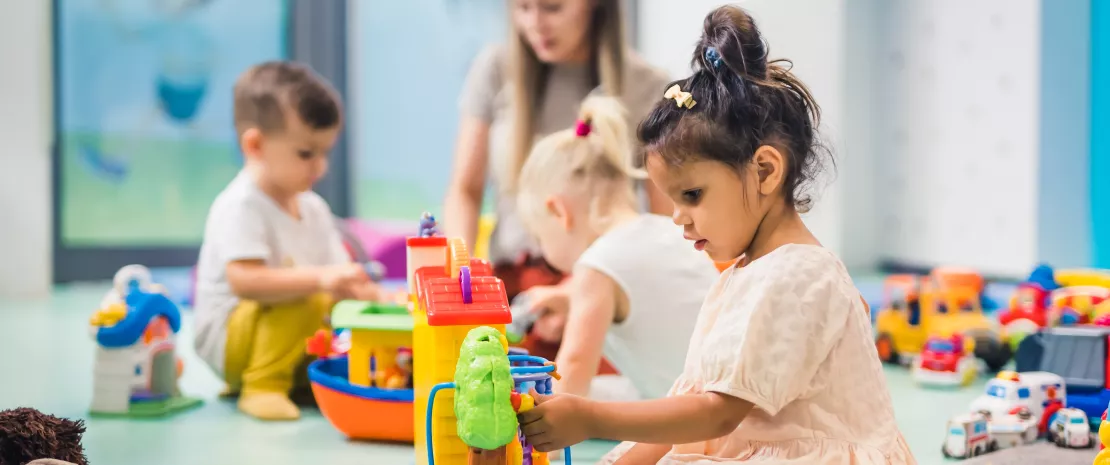
Microbiota transmission between infants during their first year in nursery is intense, suggesting social interactions during early childhood are key drivers of gut microbiota development in infants.
Lay public section
Find here your dedicated section
About this article
An infant’s microbiota develops gradually after birth. The mother is the primary source of microorganisms, but she is far from being alone.
To assess the role of early social interactions, particularly in nursery, researchers launched a longitudinal metagenomic study 1, microTOUCH-baby, in three public nursery centers in Trento, Italy. The study involved 43 infants, 7 of their siblings, 39 mothers and 30 fathers, 5 pets living in the home, and 10 nursery staff members.
Microbial colonization as a determinant factor for health during the first 1000 days of life
Nursery acts as transmission hub
When they entered nursery (median age 10 months), the infants’ microbiota was heavily influenced by that of their mother and father, but still differed significantly from that of adults. The presence of siblings at home was also a source of enrichment. In contrast, the influence of birth practices (mode of delivery, peripartum antibiotics) on microbial diversity was no longer statistically significant at this age.
As early as the first month of nursery, microbiota transmission between babies began. Eight strains spread very efficiently: initially detected in no more than one infant, after a few months, they were present in more than half of the group.
After three months in nursery, a convergence was observed in the infants’ gut microbiota: diversity between children decreased (-7% during the first quarter), and the proportion of strains acquired from nursery peers (28.4%) ultimately surpassed those acquired from family (20.0%).
In total, the study identified more than 565,000 instances of strain sharing over 15 months, with complex chains of transmission. Pets also shared strains with infants, but to a more limited extent.

Factors influencing acquisition
Unsurprisingly, antibiotic treatment was the factor that most influenced transmission: it reduced the retention of existing strains but was followed by a massive influx of new strains, more pronounced in the infants than in the adults. Exposure in nursery could contribute to this rapid recovery of microbial diversity after treatment.
Infants with siblings acquire significantly fewer strains at nursery than only children. Early acquisition via siblings could “saturate” the potential for acquiring new strains.
In the study, certain species, such as the beneficial Bifidobacterium longum subsp. infantis, typically found in breastfed children, was present only in the infants. Other highly transmissible species included fiber-degrading bacteria, which suggests these social transmissions may promote healthy microbiota development.
Thus, social interactions such as those in nursery appear to be essential to microbiota development, acting, according to the authors, as a “microbial enrichment hub” beyond the family circle.
See also


