

About the Institute
  • English
  • Français
  • Español
  • Portuguese
  • Polish

Breadcrumb

  1. Home
  2. Our marvelous microbiota
  3. Kidney stones: a mix of minerals... and bacteria?
  • Learn all about microbiota
    • The gut microbiota
    • The ENT microbiota
    • The pulmonary microbiota
    • The urinary microbiota
    • The skin microbiota
    • The vaginal microbiota
    • The exposome
  • Microbiota and related conditions
    • Digestive disorders
    • Women disorders
    • Metabolic disorders
    • Skin disorders
    • Pediatric disorders
    • Psychiatric disorders
    • Neurological disorders
    • Respiratory disorders
    • Urinary disorders
  • Act on your microbiota
    • Probiotics
    • Prebiotics
    • Diet
  • Publications
    • News
    • Thematic folders
    • Thematic pages
    • Microbiota Q & A
    • Patients stories
    • Experts' point of view
  • About the Institute
    • About us
    • International Microbiota Observatory
    • Microbiotalks
    • Press room
    • Partnerships

Healthcare professionals section

Find here your dedicated section
Biocodex logo
The power of your gut
Our marvelous microbiota
My microbiota as a woman

Breadcrumb

  1. Home
  2. Our marvelous microbiota
  3. Kidney stones: a mix of minerals... and bacteria?
Our marvelous microbiota

Kidney stones: a mix of minerals... and bacteria?

Urology
The urinary microbiota

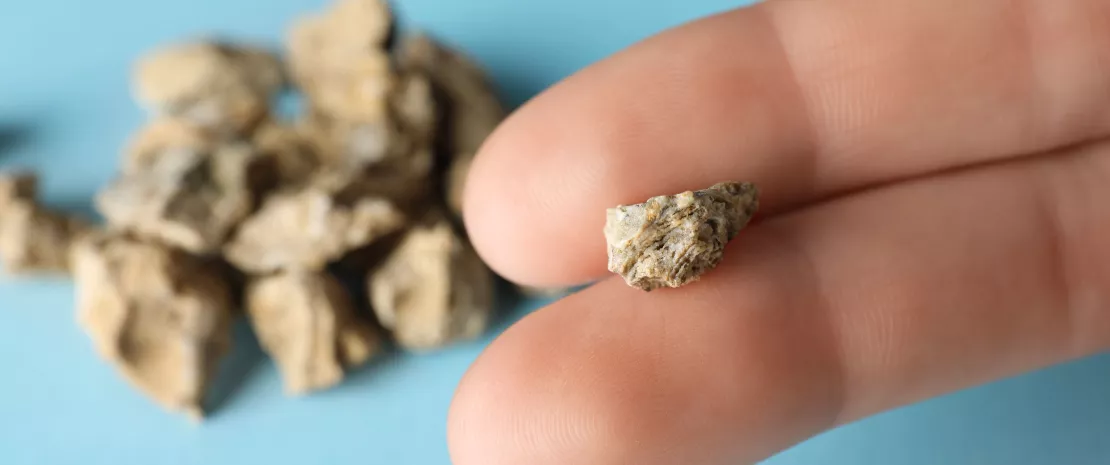
Are kidney stones more than just mineral deposits? A study has revealed that bacteria are part of the internal structure of calcium oxalate kidney stones. This suggests that bacteria play a role in the formation of these stones in the kidneys. 

The power of your gut
Our marvelous microbiota
My microbiota as a woman
  • Learn all about microbiota
    • The gut microbiota
    • The ENT microbiota
    • The pulmonary microbiota
    • The urinary microbiota
    • The skin microbiota
    • The vaginal microbiota
    • The exposome
  • Microbiota and related conditions
    • Digestive disorders
    • Women disorders
    • Metabolic disorders
    • Skin disorders
    • Pediatric disorders
    • Psychiatric disorders
    • Neurological disorders
    • Respiratory disorders
    • Urinary disorders
  • Act on your microbiota
    • Probiotics
    • Prebiotics
    • Diet
  • Publications
    • News
    • Thematic folders
    • Thematic pages
    • Microbiota Q & A
    • Patients stories
    • Experts' point of view
  • About the Institute
    • About us
    • International Microbiota Observatory
    • Microbiotalks
    • Press room
    • Partnerships

Healthcare professionals section

Find here your dedicated section
Biocodex logo

Sources

This article is based on scientific information
Sharing is caring

Your friends might be interested in this topic. Why not share it?

  • Facebook
  • Twitter
  • Mail

About this article

Created 30 June 2026
Updated 02 July 2026

Kidney stones, or nephrolithiasis, are “stones” that form in the kidneys from minerals present in the urine.
Most are so-called calcium stones, which are composed of calcium, particularly in the form of calcium oxalate.
Until now, the formation of these stones was primarily explained by a chemical process: when urine is too rich in calcium and oxalate, crystals form, grow in size, and then clump together in the urinary tract. 

70% Calcium-based stones account for over 70% of stones, making them by far the most prevalent type globally. ¹

1/11 Kidney stone disease prevalence is on the rise globally in recent decades, with a lifetime incidence rate of 1 in 11 people. ¹

80% A recurrence rate of up to 80% has been observed in certain compositions. ¹

However, this view may be mistaken, just like the belief that urine is sterile, since it harbors a urinary microbiota, important for health.

3

The main types of kidney stones are:

  • calcium stones, the most common type of stone
  • struvite stones, usually caused by an infection, like a urine infection
  • uric acid stones, usually caused by a large amount of acid in your urine. 1

Bacteria in calcium stones

A study 1 published in the journal PNAS in 2026 suggests that a biological factor—bacteria—also plays an important role.
What led the researchers down this road was a surprising discovery: the presence in calcium oxalate kidney stones of bacteria and “biofilm” structures (a sort of protective matrix harboring bacterial communities).

Symptoms of kidney stones

You may not notice if you have small kidney stones. You'll usually pee them out without any discomfort.

Larger kidney stones can cause several symptoms, including:

  • pain in the side of your tummy (abdomen)
  • severe pain that comes and goes
  • feeling sick or vomiting. 2

Role of bacteria in stone formation

Upon closer inspection, the researchers discovered that the stones have a non-uniform structure: they are made up of alternating layers composed either of minerals or of organic structures rich in bacteria. 

On a microbiological level, bacteria were found in nearly half of the stones studied, even in those of patients with no signs of urinary tract infection. 
The most common species were : 

  • Escherichia coli
  • Enterococcus faecalis
  • and Proteus mirabilis. 

More than one-third of the stones contained multiple bacterial species, forming true microbial communities. 

What causes kidney stones ?

Waste products in the blood can occasionally form crystals that collect inside the kidneys. Over time, the crystals may build up to form a hard stone-like lump.

This is more likely to happen if you:

  • do not drink enough fluids
  • are taking some types of medication
  • have a medical condition that raises the levels of certain substances in your urine

After a kidney stone has formed, your body will try to pass it out when you pee. 2

The researchers believe bacteria play an active role in stone formation. They produce biofilms rich in extracellular DNA, capable of capturing calcium ions and concentrating them locally.
These structures create “starting points” conducive to the formation of calcium oxalate crystals.
The crystals then develop around and through these biofilms, which gradually become integrated into the kidney stone in successive layers.

Are kidney stones a biocomposite?

Thus, kidney stones may be more than simple mineral deposits that result from a chemical imbalance. Instead, they may comprise hybrid structures that combine mineral and biological components, i.e., true “biocomposites.”

If confirmed, this model could transform our understanding of the condition and open up new avenues for prevention and treatment that target not only the crystals but also the bacterial biofilms involved in their formation.

Sources

1. Schmidt WC, Mousavi A, Li J, Yang R et al. Intercalated bacterial biofilms are intrinsic internal components of calcium-based kidney stones. Proc Natl Acad Sci  SA. 2026 Feb 3;123(5):e2517066123.

2. NHS - Kidney stones

Tags
Urinary system Urinary microbiota Urinary tract infection Urology Kidney stones Microbiome Flora

    See also

    Can dark chocolate protect against the effects of kidney disease?
    From birth to death, an exposome with different consequences on our health
    Created 30 June 2026
    Updated 02 July 2026

    About this article

    To know more about this topic.

    Main topic

    Urology

    Related microbiotas

    The urinary microbiota
    Our marvelous microbiota

    Everything you need to know about sleep and microbiota

    We all know how a bad night's sleep can ruin the next day, but what if your gut had something to do with it...

    Find out more

    The gut microbiota

    Gut microbiota: why is it that important for your health? We have trillions1 of bacteria that populate...

    Find out more

    What foods promote a balanced microbiota?

    We don’t always realize that the food we eat provides essential nourishment not only to our body, but to th...

    Find out more

    Chronic abdominal pain in children: could it be IBS?

    “Mom, dad, my tummy hurts…”. Just an excuse to skip school, or a real illness? If the abdominal pain is rec...

    Find out more

    Acne and microbiota

    Acne, which is a very common skin disease during adolescence, is caused by hormonal changes associated with...

    Find out more

    Microbiotalk: "Break barriers and address taboos in women’s health" - 2025

    Breaking Barriers: A Bold Conversation on Women’s Health ...

    Find out more

    Exposome: exposed microbiota puts health at risk

    Have you ever noticed that some people seem to get sick more often than others? Behind this inequality lies...

    Find out more

    Microbiotalk: short conferences on antimicrobial resistance

    Breaking the silence: a global conversation on antimicrobial resistance Antimicrobial resistance (AMR) is ...

    Find out more

    Latest news

    News
    03.04.2025

    Groundbreaking study: every home has unique water microbiome

    Read the article
    03.07.2025

    What are your mouth microbes really telling you!

    Read the article
    25.08.2025

    The surprising key to Alzheimer's may be in your gut, not your brain

    Read the article
    Photo Observatoire: Running
    22.04.2024

    Microbiota & sport: competitive micro-organisms

    Read the article
    21.08.2025

    Feel good in your skin... and your skin microbiota

    Read the article
    26.05.2021

    Is the gut microbiota a good indicator of longevity?

    Read the article
    11.06.2026

    Sunlight is reshaping the bacteria on your skin

    Read the article
    21.05.2026

    The air you breathe is changing your mouth microbiome

    Read the article
    • Learn all about microbiota
      • The gut microbiota
      • The ENT microbiota
      • The pulmonary microbiota
      • The urinary microbiota
      • The skin microbiota
      • The vaginal microbiota
      • The exposome
    • Microbiota and related conditions
      • Digestive disorders
      • Women disorders
      • Metabolic disorders
      • Skin disorders
      • Pediatric disorders
      • Psychiatric disorders
      • Neurological disorders
      • Respiratory disorders
      • Urinary disorders
    • Act on your microbiota
      • Probiotics
      • Prebiotics
      • Diet
    • Publications
      • News
      • Thematic folders
      • Thematic pages
      • Microbiota Q & A
      • Patients stories
      • Experts' point of view
    • About the Institute
      • About us
      • International Microbiota Observatory
      • Microbiotalks
      • Press room
      • Partnerships

    Healthcare professionals section

    Find here your dedicated section
    Biocodex logo
    The power of your gut
    Our marvelous microbiota
    My microbiota as a woman
    • English
    • Français
    • Español
    • Portuguese
    • Polish

    Browse the site

    • Learn all about microbiota
      • The gut microbiota
      • The ENT microbiota
      • The pulmonary microbiota
      • The urinary microbiota
      • The skin microbiota
      • The vaginal microbiota
      • The exposome
    • Microbiota and related conditions
      • Digestive disorders
      • Women disorders
      • Metabolic disorders
      • Skin disorders
      • Pediatric disorders
      • Psychiatric disorders
      • Neurological disorders
      • Respiratory disorders
      • Urinary disorders
    • Act on your microbiota
      • Probiotics
      • Prebiotics
      • Diet
    • Publications
      • News
      • Thematic folders
      • Thematic pages
      • Microbiota Q & A
      • Patients stories
      • Experts' point of view
    • About the Institute
      • About us
      • International Microbiota Observatory
      • Microbiotalks
      • Press room
      • Partnerships

    Healthcare professionals section

    Find here your dedicated section
    Biocodex logo

    Discover

    The power of your gut
    Our marvelous microbiota
    My microbiota as a woman

    Join the microbiota community

    • Facebook
    • Twitter
    • LinkedIn
    • YouTube
    • Instagram
    • Bluesky

    Healthcare professionals section

    Find here your dedicated section

    Redirection

    You are about to be redirected and leave our website

    • Be redirected
    • Stay on the Biocodex Microbiota Institute's website

    Stay updated

    Join the Microbiota Community and receive once a month “The Essential” to stay up to date on the latest news about microbiota.

    * Mandatory Fields

    BMI 20-35

    Stay with us !

    Join the microbiota community and receive "The Essentials" once a month to stay up to date with the latest news on the microbiota.

    * Mandatory Fields

    BMI 20-35

    Explore

    30.06.2026

    Kidney stones: a mix of minerals... and bacteria?

    Read the article
    23.06.2026

    Kefir: is it good for gut health?

    Read the article
    15.06.2026

    Protein-rich or high-fiber: which breakfast is best for our gut microbiota?

    Read the article
    • Learn all about microbiota
      • The gut microbiota
      • The ENT microbiota
      • The pulmonary microbiota
      • The urinary microbiota
      • The skin microbiota
      • The vaginal microbiota
      • The exposome
    • Microbiota and related conditions
      • Digestive disorders
      • Women disorders
      • Metabolic disorders
      • Skin disorders
      • Pediatric disorders
      • Psychiatric disorders
      • Neurological disorders
      • Respiratory disorders
      • Urinary disorders
    • Act on your microbiota
      • Probiotics
      • Prebiotics
      • Diet
    • Publications
      • News
      • Thematic folders
      • Thematic pages
      • Microbiota Q & A
      • Patients stories
      • Experts' point of view
    • About the Institute
      • About us
      • International Microbiota Observatory
      • Microbiotalks
      • Press room
      • Partnerships

    Healthcare professionals section

    Find here your dedicated section
    Biocodex logo

    Discover

    The power of your gut
    Our marvelous microbiota
    My microbiota as a woman

    Healthcare professionals section

    Find here your dedicated section

    Join the microbiota community

    • Facebook
    • Twitter
    • LinkedIn
    • YouTube
    • Instagram
    • Bluesky

    © 2026 Biocodex. All rights reserved.

    • Legal notice
    • GTU
    • Data protection policy
    • Sitemap
    • Cookies settings
    • Digital accessibility : partially compliant
    Biocodex logo