
About the Institute
  • English
  • Français
  • Español
  • Portuguese
  • Polish

Breadcrumb

  1. Home
  2. Gastroenterology
  3. This one gut microbe could change the way cancer therapy performs
  • Our publications
    • News
    • HCP Magazine
    • Thematic pages
    • Experts' point of view
    • Thematic folders
    • Overviews - Microbiota Magazine
  • About the Institute
    • About us
    • International Microbiota Observatory
    • Press room
    • Partnerships
  • Congresses
    • Congress calendar
    • Congress reviews
  • Continuing Medical Education
    • Accrediting courses
  • Useful documents
    • How to talk about
    • Infographics
    • Diagnosis tools
    • Patients Stories

    Join the microbiota community

    • Facebook
    • Twitter
    • LinkedIn
    • YouTube
    • Instagram
    • Bluesky

Lay public section

Find here your dedicated section

Gastroenterology
Gynecology
Pediatrics
General Medicine

Breadcrumb

  1. Home
  2. Gastroenterology
  3. This one gut microbe could change the way cancer therapy performs
Gastroenterology

This one gut microbe could change the way cancer therapy performs

Cancer
Oncology Immunotherapy

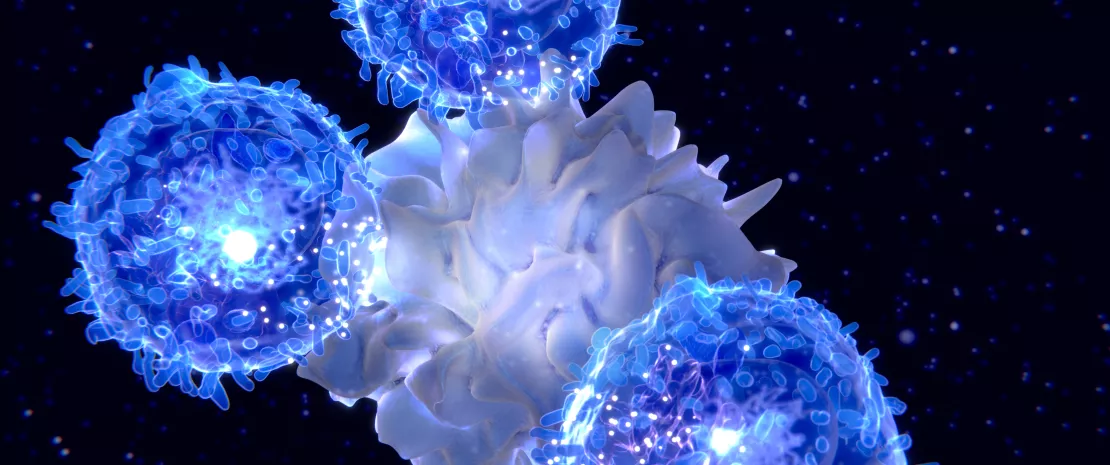
A single gut microbe may influence whether a patient responds to cancer immunotherapy. This study reveals how signals from the intestine can strengthen the body’s antitumour defences in ways we never expected.

Gastroenterology
Gynecology
Pediatrics
General Medicine
  • Our publications
    • News
    • HCP Magazine
    • Thematic pages
    • Experts' point of view
    • Thematic folders
    • Overviews - Microbiota Magazine
  • About the Institute
    • About us
    • International Microbiota Observatory
    • Press room
    • Partnerships
  • Congresses
    • Congress calendar
    • Congress reviews
  • Continuing Medical Education
    • Accrediting courses
  • Useful documents
    • How to talk about
    • Infographics
    • Diagnosis tools
    • Patients Stories

    Join the microbiota community

    • Facebook
    • Twitter
    • LinkedIn
    • YouTube
    • Instagram
    • Bluesky

Lay public section

Find here your dedicated section

Sources

This article is based on scientific information

Sharing is caring

Your colleagues might be interested in this topic. Why not share it?

  • Facebook
  • Twitter
  • LinkedIn
  • Mail

About this article

Created 04 December 2025
Updated 10 December 2025

Immunotherapy is rewriting oncology, but in most solid tumours, (sidenote: PD-1 inhibitors Drugs that release the “brakes” on T cells by blocking the PD-1 receptor, allowing the immune system to attack tumours more effectively. ) still fail the majority of patients. Our story starts in a place every clinician knows matters but few can yet “dose”: the gut microbiome. Oncologists have seen that some patients ride a wave of durable response to treatment, while others, seemingly similar on paper, barely respond at all. A new study published in Nature 1 asks a simple but profound question: a single gut microbe that can reprogram dendritic cells, send them on a “road trip” from the intestine to the tumour, and make checkpoint inhibitors work better? And the answer appears to be yes.

20.11.2025 Gut–mind–pelvic axis: new insights from microbiome science Read more

A hidden player in PD-1 response

Researchers from National Cancer Center Research Institute, Tokyo followed patients with lung and gastric cancer receiving PD-1 blockade and looked at their stool microbiome just before treatment. Responders consistently had richer bacterial diversity and, more specifically, more members of the (sidenote: Ruminococcaceae A family of gut bacteria often linked to a healthier, more diverse microbiome and better immune activation.
 
)
family. From this group they isolated an unassuming anaerobe, a strain of Hominenteromicrobium mulieris they call YB328.

Patients with higher levels of YB328 had longer progression-free survival across several cohorts and cancer types. In contrast, those enriched with a common Bacteroidaceae member, Parabacteroides vulgatus, tended to do worse. When these microbes were moved into mice, the story held: YB328 turned PD-1 therapy into a much more potent anti-tumour tool, while P. vulgatus left tumours largely unbothered.

How one bacterium re-wires dendritic cells

YB328 doesn’t just “boost the immune system.” It changes how key immune cells are made. In both lab and animal studies, this bacterium guides early immune precursors to develop into a specific type of dendritic cell, (sidenote: cDC1 dendritic cells A specialised subset of dendritic cells skilled at presenting antigens and activating strong CD8 T-cell responses against tumours.
 
)
, by turning on the genes that drive this pathway. It uses a set of sensing signals inside these cells to do so.

Once formed, these gut-trained cDC1 cells don’t stay in the intestine. They move step-by-step through the lymphatic system and eventually reach the tumour. Using special mouse models that let researchers track cell movement, the study shows these gut-derived dendritic cells physically entering the tumour environment.
Inside the tumour, they present tumour antigens more effectively, activate more CD8 T cells, and help those T cells recognise a wider range of tumour targets, including weaker signals that would normally be missed. In simple terms, YB328 helps the immune system “see” more of the tumour and respond with greater strength and breadth.

Microbial competition and therapeutic imitation

Equally striking is what happens when ecology works against us. In mice colonized with a “non-responder” microbiome, adding YB328 can rescue PD-1 efficacy, but only if competing strains like P. vulgatus don’t block its (sidenote: Engraftment The successful establishment and persistence of a microbial strain in the gut after it is introduced.
 
)
. One microbe can cancel out another’s benefit, a sobering reminder for any future live biotherapeutic strategy.

Finally, the authors show that a defined cocktail of (sidenote: TLR agonists Molecules that activate Toll-like receptors, stimulating innate immune pathways and boosting immune cell activation. ) can mimic much of YB328’s effect on cDC1 programming and PD-1 synergy. This work reframes the gut not just as a biomarker source, but as a tunable upstream regulator of dendritic cell biology and checkpoint response, opening the door to microbiome-guided or TLR-based adjuvants that might turn more of our “non-responders” into durable responders.

Phage therapy: a new way to restore the effectiveness of chemotherapy

Find out more!
Source

1. https://doi.org/10.1038/s41586-025-09249-8

Tags
Cancer Chemotherapy Immunity Immunotherapy Immune response Gut microbiota Gut health Microbiome Flora

    See also

    Gut microbiota and chemotherapy: adverse effects or better treatment efficacy?
    Cancer: microbiota involved in the abscopal effect
    Created 04 December 2025
    Updated 10 December 2025

    About this article

    To know more about this topic.

    Main topic

    Cancer

    Medical practice

    Oncology Immunotherapy

    Content type

    News
    Gastroenterology

    Resilience of healthy adult gut microbiota following antibiotic exposure

    Commented articles - Adults' section By Pr. Harry Sokol ...

    Find out more

    Antimicrobial resistance fresco: learn, play and act now

    The Antimicrobial resistance fresco is an interactive and educational experience that raises awareness abou...

    Find out more

    Probiotics: what exactly are we talking about?

    From the Latin pro and Greek bios meaning “for life”, the term “probiotic” was suggested over 60 years ago,...

    Find out more

    Association between fungal dysbiosis and environment

    The fungal portion of the gut microbiota (or mycobiota) has been much less studied than the bacterial porti...

    Find out more

    Your IBS Diagnosis Check List

    How many patients suffering from gut disorder do you see per week? How many are diagnosed with Irritable Bo...

    Find out more

    How do you choose a probiotic for your patient?

    Faced with a plethora of products on the market, it's not always easy for health professionals to suggest a...

    Find out more

    The Janus face of Antibiotics: Life Savers and Microbiota Disruptors

    A page turns: with the advent of antibiotics in the 20th century, this type of therapy, despite its undoubt...

    Find out more

    Fecal transplantation - ready for prime time?

    Congress review By Pr. Danny De Looze Department of Gastroenterology University Hospital Gent, Belgium ...

    Find out more

    Continue reading

    News
    26.11.2025

    Anti-inflammatory diet and cognitive impairment: role of the oral and gut microbiota

    Read the article
    28.01.2025

    How to rebuild my gut microbiota after taking antibiotics?

    Read the article
    29.08.2023

    Massive amounts of antibiotic resistance genes found in clouds

    Read the article
    09.02.2022

    Antimicrobial resistance genes “stowaway” in gut microbiota during international travel

    Read the article
    08.01.2024

    When travel breeds antibiotic resistance

    Read the article
    08.03.2024

    Revolutionizing Infection Control: FMT's Role in Combatting Multidrug-Resistant Organisms in Transplant Patients

    Read the article
    Actu PRO : La transplantation fécale, solution à l’antibiorésistance chez les patients immunodéprimés ?
    14.05.2019

    Is fecal transplant a solution to prevent antibiotic resistance in immunocompromised patients?

    Read the article
    13.02.2024

    Antibiotics disrupt cancer immunotherapy via gut and immune effects

    Read the article
    • Our publications
      • News
      • HCP Magazine
      • Thematic pages
      • Experts' point of view
      • Thematic folders
      • Overviews - Microbiota Magazine
    • About the Institute
      • About us
      • International Microbiota Observatory
      • Press room
      • Partnerships
    • Congresses
      • Congress calendar
      • Congress reviews
    • Continuing Medical Education
      • Accrediting courses
    • Useful documents
      • How to talk about
      • Infographics
      • Diagnosis tools
      • Patients Stories

      Join the microbiota community

      • Facebook
      • Twitter
      • LinkedIn
      • YouTube
      • Instagram
      • Bluesky

    Lay public section

    Find here your dedicated section
    Gastroenterology
    Gynecology
    Pediatrics
    General Medicine
    • English
    • Français
    • Español
    • Portuguese
    • Polish

    Browse the site

    • Our publications
      • News
      • HCP Magazine
      • Thematic pages
      • Experts' point of view
      • Thematic folders
      • Overviews - Microbiota Magazine
    • About the Institute
      • About us
      • International Microbiota Observatory
      • Press room
      • Partnerships
    • Congresses
      • Congress calendar
      • Congress reviews
    • Continuing Medical Education
      • Accrediting courses
    • Useful documents
      • How to talk about
      • Infographics
      • Diagnosis tools
      • Patients Stories

      Join the microbiota community

      • Facebook
      • Twitter
      • LinkedIn
      • YouTube
      • Instagram
      • Bluesky

    Lay public section

    Find here your dedicated section

    Discover

    Gastroenterology
    Gynecology
    Pediatrics
    General Medicine

    Join the microbiota community

    • Facebook
    • Twitter
    • LinkedIn
    • YouTube
    • Instagram
    • Bluesky

    Lay public section

    Find here your dedicated section

    Redirection

    You are about to be redirected and leave our website

    • Be redirected
    • Stay on the Biocodex Microbiota Institute's website

    Stay with us !

    Join the Microbiota Community of HCPs and researchers and receive “Microbiota Digest” and "HCP Magazine" to stay up to date on the latest news about microbiota.

    * Mandatory Fields

    BMI 20-35

    Explore

    04.12.2025

    This one gut microbe could change the way cancer therapy performs

    Read the article
    26.11.2025

    Anti-inflammatory diet and cognitive impairment: role of the oral and gut microbiota

    Read the article
    20.11.2025

    Gut–mind–pelvic axis: new insights from microbiome science

    Read the article

    Stay updated

    Join the Microbiota Community of HCPs and researchers and receive “Microbiota Digest” and "HCP Magazine" to stay up to date on the latest news about microbiota.

    * Mandatory Fields

    BMI 20-35

    • Our publications
      • News
      • HCP Magazine
      • Thematic pages
      • Experts' point of view
      • Thematic folders
      • Overviews - Microbiota Magazine
    • About the Institute
      • About us
      • International Microbiota Observatory
      • Press room
      • Partnerships
    • Congresses
      • Congress calendar
      • Congress reviews
    • Continuing Medical Education
      • Accrediting courses
    • Useful documents
      • How to talk about
      • Infographics
      • Diagnosis tools
      • Patients Stories

      Join the microbiota community

      • Facebook
      • Twitter
      • LinkedIn
      • YouTube
      • Instagram
      • Bluesky

    Lay public section

    Find here your dedicated section

    Discover

    Gastroenterology
    Gynecology
    Pediatrics
    General Medicine

    Lay public section

    Find here your dedicated section

    Join the microbiota community

    • Facebook
    • Twitter
    • LinkedIn
    • YouTube
    • Instagram
    • Bluesky

    © 2025 Biocodex. All rights reserved.

    • Legal notice
    • GTU
    • Data protection policy
    • Sitemap
    • Cookies settings
    • Digital accessibility : partially compliant
    Biocodex logo