



A world tour of fermented foods
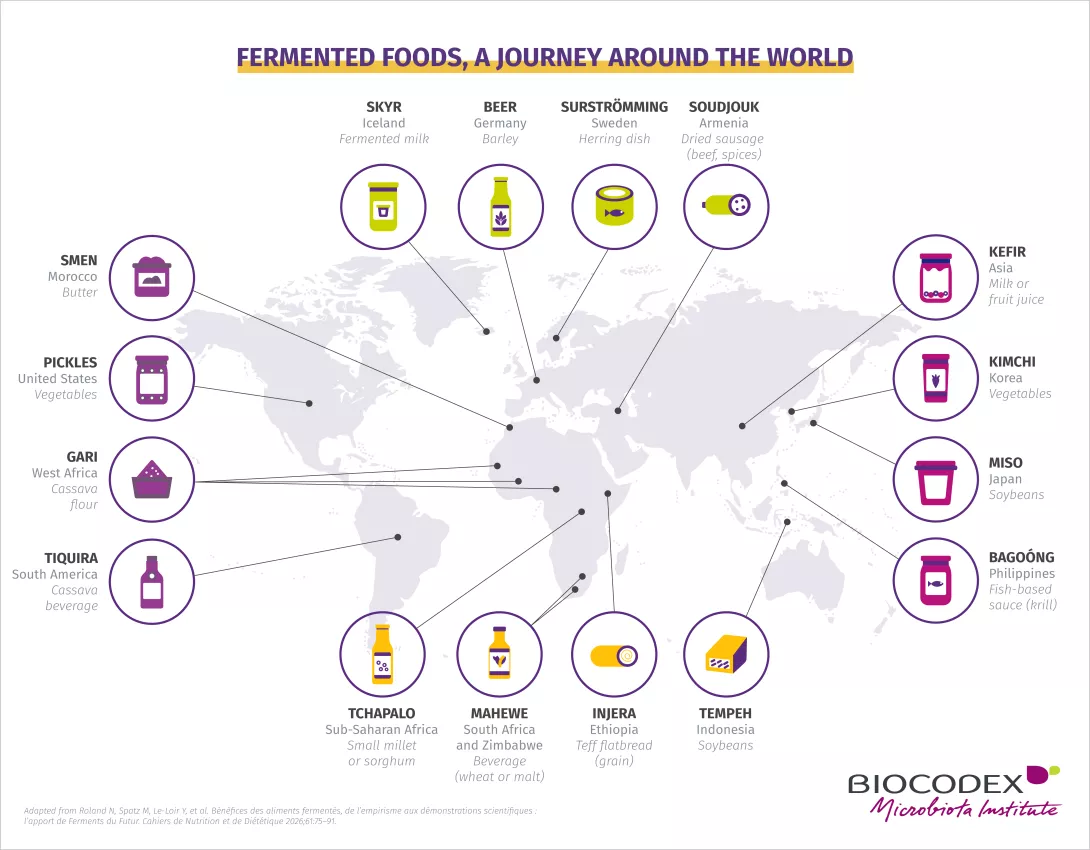
Fermentation is a simple and natural way to preserve food. All it takes is the action of microorganisms such as yeasts and bacteria. No wonder this method has spread throughout the world, from preserving herring in Sweden to fermenting butter in the Tuareg desert. But the benefits of fermentation can go far beyond that: in many cases, it can also make foods easier to digest.
Healthcare professionals section
Find here your dedicated section
About this article
United States, India…
Pickles: the ancient art of fermented vegetables
For many people, the word “pickles” conjures up images of tangy, vinegar-soaked cucumbers that are a staple of American hamburgers. The exact origin of pickles remains unclear, but as early as 2030 B.C., cucumbers from the Indian subcontinent were reportedly being preserved through fermentation.1 And the tradition is still very much alive. In India, pickled vegetables and fruits—such as mangoes, lemons, and chili peppers—known as achar, play an important role in Indian cuisine.1 But be aware: not all pickles are created equal. Traditional pickles are left to ferment for several months in a very salty brine—a low-oxygen environment conducive to fermentation by lactic acid bacteria—while other, speedier recipes combine fermentation with vinegar. “Refrigerated” pickles, on the other hand, ferment for only a few days and must be kept cold.2
Long-fermented varieties have greater nutritional benefits as they contain more live microorganisms, some of which may contribute to the balance of the gut microbiota, digestion, and even immunity, although these health effects have yet to be confirmed.3–5
Sweden
Surströmming: canned fermented herring
This Swedish specialty is made from fresh herring that is salted and then submerged in brine where fermentation continues inside the can.6 As the process unfolds, the can naturally begins to bulge. The health benefits of this surprising dish—which has a very sour and slightly fizzy taste—6 are thought to come primarily from the fish itself, which is rich in protein and omega-3 fatty acids.7 Fermented fish in general has also been associated with possible antioxidant and antihypertensive effects, as well as potential protection against certain cancers and beneficial changes to the gut microbiota (increase in Bacteroidetes, decrease in Firmicutes).8
But, these benefits should be taken with a grain of salt, as there is far from a consensus on them: in one human trial, volunteers consuming surströmming for a week experienced no significant changes to their gut microbiota.9
Morocco, Algeria
Smen: a long-lasting butter
Smen is a fermented, clarified(1) butter traditionally made in North Africa. It is prepared from camel milk: after the milk undergoes spontaneous fermentation, the butter is separated by churning, then fermented, salted, and stored in hermetically sealed earthenware jars, where it can age for several years.12 Over time, smen develops an intensely rich flavor and powerful aromas. As with all fermented dairy products, fermentation is thought to produce small bioactive molecules that have beneficial effects on health. However, many of the health benefits traditionally attributed to smen—from treating hemorrhoids and rheumatism to soothing colds and burns—belong more to cultural tradition than to firmly established science.13 Nevertheless, antibacterial properties against Staphylococcus aureus and Escherichia coli have been demonstrated in vitro, and accelerated wound healing has been observed in animals (but not—yet?—in humans).14
(1) Clarification involves removing water and milk proteins (particularly casein), leaving almost nothing but fat and giving it a much longer shelf life.12
Bulgaria
Yogurt: for better milk digestion
Yogurt is a fermented dairy product made using two specific bacteria: Streptococcus thermophilus and Lactobacillus delbrueckii subsp. bulgaricus.10 These bacteria convert the lactose—the natural sugar in milk—into lactic acid. This process gives yogurt its characteristic taste and texture, while also making the milk easier to digest. Other bacteria can ferment milk too, but the resulting product is then referred to as “fermented milk” rather than “yogurt”. One direct result of this lactic fermentation process is that it can make dairy easier to digest for people with lactose intolerance.10 The consumption of yogurt and other fermented dairy products has also been associated with a reduced risk of breast and colorectal cancer and type 2 diabetes mellitus, better weight management, and improved cardiovascular, bone, and digestive health.10,11
But here again, a little caution is needed: while the associations are promising, science is still far from proving a direct cause-and-effect relationship.

Ethiopia
Injera: a gluten-free flatbread
Injera is a traditional fermented flatbread from Ethiopia, made from teff flour,15 an ancient gluten-free grain. A staple of Ethiopian cuisine, it is particularly rich in carbohydrates, while also providing protein, fiber, and a range of minerals. Its fermentation is powered by yeasts—notably the well-known brewer’s yeast Saccharomyces cerevisiae—and lactic acid bacteria.16–19 Their action appears to improve protein digestibility, increase the activity of beneficial compounds such as phenols, and enhance antioxidant activity.15,20
It can also reduce compounds (known as antinutritional factors) naturally present in grains, which limit the absorption of certain nutrients.21
Nigeria
Gari: an affordable cassava-based food
Gari is a grainy, creamy flour made by roasting fermented cassava paste.22 This staple food is part of the daily diet of millions of Nigerians thanks to its availability and affordability. The traditional production process involves several sequential steps: grating the cassava, optionally adding red palm oil, fermenting, draining (dehydration), sifting, roasting on a heated griddle to gelatinize the starch, and then cooling.22 All these steps help reduce certain undesirable compounds such as cyanide, but also destroy vitamins. Gari is rich in carbohydrates and fiber but low in protein. It may also contain phenols with antioxidant properties, although this depends on how the gari is made and the type of cassava used.23
What foods promote a balanced microbiota?
Indonesia
Tempeh: taking the nutritional benefits of soy to the next level
Originating on the island of Java, tempeh is an Indonesian staple that has become a favorite among vegetarians around the world. This fermented soy product, far less bland than its cousin tofu, adds nutty and mushroom-like flavors to many Indonesian dishes. It is made by fermenting soybeans with the fungus Rhizopus oligosporus, a technique said to have been inspired by traditional Chinese methods of making soy sauce.24 This fermentation process improves the absorption of soy’s proteins, minerals, vitamins, and isoflavones, while reducing antinutritional factors. The result is a product of high nutritional quality that can contribute to preventing malnutrition.24,25 Some authors have also reported potential benefits ranging from lower LDL cholesterol and blood pressure26 to antioxidant, digestive, and cognitive effects—24 and even improved athletic performance.27 However, most of these findings are still very much preliminary.
Philippines
Bagoong: a condiment rich in protein… but also in salt and histamines
Bagoong is a traditional Filipino condiment made from fish or small shrimp that are ground and fermented with salt. Although rich in protein, the nutritional composition of this paste varies depending on the recipe.28,29 For example, shrimp-based bagoong (also known by the generic names Terasi in Asia, Belacan in Malaysia, and Kapi in Thailand…) tends to be slightly higher in fat and lower in minerals. As for its potential health benefits (antioxidant? cholesterol-lowering?),30 they have rarely been studied, and often only in test tubes rather than in humans, which makes the results highly uncertain. Keep in mind that bagoong is high in both histamines (with a risk of poisoning sometimes called non-allergic food hypersensitivity) and in salt (an ingredient best consumed in moderation).28,29,31
Miracle foods do not exist, but a balanced diet does.
Check out our series of articles on microbiota and fermented foods:
The many health benefits of fermented foods
Kefir: a natural ally for your gut microbiota?
Yogurts, the great allies of your gut microbiome
Kombucha: marketing hype or scientific claims?
Kimchi: a blend of fiber and beneficial bacteria
The beneficial—and sometimes paradoxical—effects of miso
See also


