

About the Institute
  • English
  • Français
  • Español
  • Portuguese
  • Polish

Breadcrumb

  1. Home
  2. The power of your gut
  3. Fermented foods: guardian angels of the microbiota
  • Learn all about microbiota
    • The gut microbiota
    • The ENT microbiota
    • The pulmonary microbiota
    • The urinary microbiota
    • The skin microbiota
    • The vaginal microbiota
    • The exposome
  • Microbiota and related conditions
    • Digestive disorders
    • Women disorders
    • Metabolic disorders
    • Skin disorders
    • Pediatric disorders
    • Psychiatric disorders
    • Neurological disorders
    • Respiratory disorders
    • Urinary disorders
  • Act on your microbiota
    • Probiotics
    • Prebiotics
    • Fecal Microbiota Transplant
    • Diet
  • Publications
    • News
    • Thematics folders
    • Thematic pages
    • Microbiota Q & A
    • Patients Stories
    • Experts' point of view
    About the Institute

    Join the microbiota community

    • Facebook
    • Twitter
    • LinkedIn
    • YouTube
    • Instagram
    • Bluesky
  • About the Institute
    • About us
    • International Microbiota Observatory
    • Microbiotalks
    • Press room
    • Partnerships

Healthcare professionals section

Find here your dedicated section
Biocodex logo
The power of your gut
Our marvelous microbiota
My microbiota as a woman

Breadcrumb

  1. Home
  2. The power of your gut
  3. Fermented foods: guardian angels of the microbiota
The power of your gut

Fermented foods: guardian angels of the microbiota

Diet
The gut microbiota

Kefir, yogurt, kimchi, and miso are currently all the rage at mealtime. Popular thanks to their unique flavors, these fermented foods also serve as tireless defenders of the gut microbiota.

The power of your gut
Our marvelous microbiota
My microbiota as a woman
  • Learn all about microbiota
    • The gut microbiota
    • The ENT microbiota
    • The pulmonary microbiota
    • The urinary microbiota
    • The skin microbiota
    • The vaginal microbiota
    • The exposome
  • Microbiota and related conditions
    • Digestive disorders
    • Women disorders
    • Metabolic disorders
    • Skin disorders
    • Pediatric disorders
    • Psychiatric disorders
    • Neurological disorders
    • Respiratory disorders
    • Urinary disorders
  • Act on your microbiota
    • Probiotics
    • Prebiotics
    • Fecal Microbiota Transplant
    • Diet
  • Publications
    • News
    • Thematics folders
    • Thematic pages
    • Microbiota Q & A
    • Patients Stories
    • Experts' point of view
    About the Institute

    Join the microbiota community

    • Facebook
    • Twitter
    • LinkedIn
    • YouTube
    • Instagram
    • Bluesky
  • About the Institute
    • About us
    • International Microbiota Observatory
    • Microbiotalks
    • Press room
    • Partnerships

Healthcare professionals section

Find here your dedicated section
Biocodex logo

Sources

This article is based on scientific information

Sharing is caring

Your friends might be interested in this topic. Why not share it?

  • Facebook
  • Twitter
  • Mail

About this article

Created 10 March 2026
Updated 18 March 2026

Bread, chocolate, beer, cheese... All over the world, fermented foods are relentlessly conquering our tables. Whether just a fad or a lasting trend, in recent years the popularity of some fermented foods has been on the rise. What lies behind this newfound fame? They’re mobilizing to restore order in our microbiota. Consumed regularly and in moderation, fermented foods can actually improve gut health.1,2

Protecting us since the dawn of time

Fermented foods have always got us right in the gut. Food lovers give them pride of place in every meal, so much so that in some countries they make up more than a third of the food consumed. Long made using traditional methods, many can now be produced on an industrial scale thanks to the use of cans. This has significant benefits for food safety, since fermentation slows the proliferation of pathogenic bacteria, eliminating the need for numerous additives.

Best source of nutrition

In 1857, Louis Pasteur showed that fermented foods contain microbes that alter their nutritional composition and bioactive properties. Their shelf life is drawn out, their flavors change, and they act differently on our gut microbiota. This process is like a true fighting machine, enriching food with nutrients and live microbes that support our “second brain".3 The bacteria, yeasts, fungi, and molds that pass through our gut as a result seem to help prevent certain diseases associated with imbalances of the gut microbiota, such as type 2 diabetes and obesity.4, 5

The psychobiotic diet: might fermented or prebiotic-rich foods reduce stress? 13.02.2023 The psychobiotic diet: might fermented or prebiotic-rich foods reduce stress? Read more

Fighting on all fronts at once

Three pickles and a glass of kombucha every weekend won't work miracles. For a healthy gut, fermented foods should be consumed regularly, as part of a healthy diet. Only then can they have a positive effect on the gut microbiota. This is mainly because they ensure greater diversity of microorganisms in the gut. This diversity is essential to effective immune function and healthy metabolism. It may even ensure good brain and mental health, influencing conditions such as depression, Alzheimer’s disease, and Parkinson’s.6, 7, 8

Fighting gut inflammation

Fermented foods may also reduce gut inflammation.9, 10 Today, this condition mainly affects those living in cities, where ultra-processed foods are widely consumed. Fermented foods also have the advantage of being low in FODMAPs. These carbohydrates can lead to digestive discomfort, and fermentation cuts their proportion by 40% to 80%. This is a significant real-life plus that could help combat irritable bowel syndrome. Many fermented foods are also rich in vitamin K, which is known to slow the development tumors in the colon.11, 12

Strategists for the immune function

Fermentation also promotes the development of bacteriocins, which block the growth of harmful bacteria in our gut. Fermented foods thus shield us from a host of enemy agents, strengthening our intestinal barrier and reducing the risk of infection.13 Some, such as cabbage, even contain additional vitamin C once fermented. Yet another benefit of fermentation for microbiota is that it promotes the synthesis of short-chain fatty acids (SCFAs). The advantages of this are clear, since SCFAs seem to help regulate immune function in the gut.14

25.01.2023 Fermented vegetables: good reasons to include them in your diet Read more

Large amounts of essential minerals

To function properly, the human body needs to absorb certain substances in sufficient quantities. This includes minerals essential for life, such as iron, zinc, and calcium. However, many foods, such as cereals, have a high phytic acid content. While phytic acid is also essential for health, when consumed in excess, it contributes to the retention of ingested minerals at the intestinal barrier. By reducing the phytate content of foods, the fermentation process appears to help improve mineral absorption.15

Elite troops against lactose intolerance

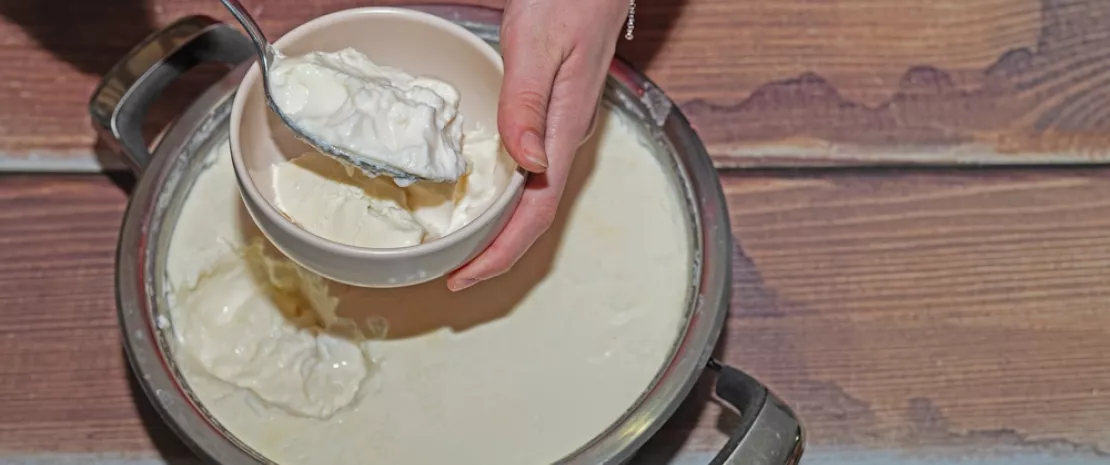
Some of us have trouble digesting excess lactose. The resulting discomfort can at times force people to radically change their diet. The right tactic? Consume more fermented dairy products, such as yogurt and cheese. While the lactose content of milk may be too high to be absorbed in large quantities, these products contain little or no lactose. They regulate transit and reduce bloating by interacting with the microbiota. Another notable benefit is that yogurt may reduce the risk of type 2 diabetes.16

Impeccable track record

Fermented foods safely expose our gut microbiota to numerous microorganisms. Of course, a huge plate of undercooked sauerkraut can lead to bloating. But when properly prepared, fermented foods seem to have only positive effects on our microbiota. If you’re still not convinced, start with small amounts of the fermented foods you find most appetizing. By then trying more, you’ll discover an unexpected variety of flavors that it would be a shame to ignore. To boost their effect on microbiota, combine them as often as possible with foods rich in prebiotics, such as fruits and seeds. However, pregnant women, immunocompromised individuals, and those with liver disease should first seek medical advice. Some fermented foods, such as kombucha, contain alcohol and should be consumed in moderation.

Good eating habits to take care of your vaginal flora

Learn more
Sources

1. Mukherjee, A., Breselge, S., Dimidi, E. et al. Fermented foods and gastrointestinal health: underlying mechanisms. Nat Rev Gastroenterol Hepatol.2023. doi:10.1038/s41575-023-00869-x

2. Valentino, V., Magliulo, R., Farsi, D. et al. Fermented foods, their microbiome and its potential in boosting human health. Microb Biotechnol. 2024.17(2):e14428. doi: 10.1111/1751-7915.14428.

3. Taylor BC, Lejzerowicz F, Poirel M, et al. Consumption of Fermented Foods Is Associated with Systematic Differences in the Gut Microbiome and Metabolome. mSystems. 2020; 5(2):e00901-19. doi: 10.1128/mSystems.00901-19.

4. Antonio Molinaro, Pierre Bel Lassen. Imidazole propionate is increased in diabetes and associated with dietary patterns and altered microbial ecology. Nat Commun. 2020 Nov 18;11(1):5881.doi: 10.1038/s41467-020-19589-w

5. Emmanuelle Le Chatelier, Trine Nielsen, Junjie Qin and Edi Prifti. Richness of human gut microbiome correlates with metabolic markers. Nature. 2013 Aug 29;500(7464):541-6. doi: 10.1038/nature12506.

6. Alli SR, Gorbovskaya I, Liu JCW, Kolla NJ, Brown L, Müller DJ. The gut microbiome in depression and potential benefit of prebiotics, probiotics and synbiotics: a systematic review of clinical trials and observational studies. Int J Mol Sciences 2022; 23: 4494.

7. Chen SJ, Chen CC, Liao HY, et al. ; Association of Fecal and Plasma Levels of Short-Chain Fatty Acids With Gut Microbiota and Clinical Severity in Patients With Parkinson Disease. Neurology. 2022 Feb 22;98(8):e848-e858.

8. Jyoti P Tamang, Koichi Watanabe, Wilhelm H Holzapfel. Diversity of microorganisms in global fermented foods and beverages. Front Microbiol. 2016; 7:377. doi: 10.3389/fmicb.2016.00377

9. Nasim SaeidiFard, Kurosh Djafarian, Sakineh Shab-Bidar. Fermented foods and inflammation: A systematic review and meta-analysis of randomized controlled trials. Clin Nutr ESPEN. 2020; 35:30-39. doi: 10.1016/j.clnesp.2019.10.010.

10. Sheng Liu, Wenjing Zhao, Ping Lan, Xiangyu Mou . The microbiome in inflammatory bowel diseases: from pathogenesis to therapy. Protein Cell. 2021 May;12(5):331-345. doi: 10.1007/s13238-020-00745-3.

11. JoEllen Welsh, Min Ji Bak, Carmen J Narvaez. New insights into vitamin K biology with relevance to cancer. Trends Mol Med . 2022 Oct;28(10):864-881. doi: 10.1016/j.molmed.2022.07.002. Epub 2022 Aug 23.

12. Pyo Y, Kwon KH, Jung YJ. Probiotic functions in fermented foods: antiviral, immunomodulatory, and anticancer benefits. Foods. 2024;13(15):2386. doi:10.3390/foods13152386

13.  Hannah C Wastyk, Gabriela K Fragiadakis, Dalia Perelman, Dylan Dahan, Bryan D Merrill , Feiqiao B Yu , Madeline Topf, Carlos G Gonzalez, William Van Treuren, Shuo Han, Jennifer L Robinson, Joshua E Elias, Erica D Sonnenburg, Christopher D Gardner, Justin L Sonnenburg. Gut-microbiota-targeted diets modulate human immune status. Cell. 2021; 184(16):4137-4153.e14. doi : 10.1016/j.cell.2021.06.019.

14. William Fusco, Manuel Bernabeu Lorenzo, Marco Cintoni, Serena Porcari, Emanuele Rinninella, Francesco Kaitsas, Elena Lener, Maria Cristina Mele, Antonio Gasbarrini, Maria Carmen Collado, Giovanni Cammarota, Gianluca Ianiro. Short-Chain Fatty-Acid-Producing Bacteria: Key Components of the Human Gut Microbiota. Nutrients. 2023 May 6;15(9):2211. doi: 10.3390/nu15092211

15. Matin Mohammadi-Kouchesfahani, Zohreh Hamidi-Esfahani, Mohammad Hossein Azizi. Isolation and identification of lactic acid bacteria with phytase activity from sourdough. Food Sci Nutr. 2019 Oct 21;7(11):3700-3708. doi: 10.1002/fsn3.1229. eCollection 2019 Nov.

16. Aune D., Norat T., Romundstad P et col. (2013) Dairy products and the risk of type 2 diabetes : a systematic review and dose-response meta-analysis of cohort studies, American  Journal of  Clinical Nutrition doi: 10.3945/ajcn.113.059030

Tags
Microbiome Flora Gut microbiota Dietary Food Immunity Digestion Nutrition Diet

    See also

    Actu GP : Mieux manger peut-il renforcer l’immunité ? Can healthy eating habits strengthen immunity?
    Diet and treatment: a history of microbial inequality
    Created 10 March 2026
    Updated 18 March 2026

    About this article

    To know more about this topic.

    Main topic

    Diet

    Related microbiotas

    The gut microbiota
    The power of your gut

    Microbiotalk: short conferences on antimicrobial resistance

    Breaking the silence: a global conversation on antimicrobial resistance Antimicrobial resistance (AMR) is ...

    Find out more

    Antibiotic-associated diarrhea

    Antibiotics are a powerful tool in the fight against bacterial infections. While treatments sometimes appea...

    Find out more

    Probiotics

    Probiotics: essential information for understanding and choosing them correctly. What exactly are probiotic...

    Find out more

    Microbiotalk: "Break barriers and address taboos in women’s health"

    Breaking Barriers: A Bold Conversation on Women’s Health ...

    Find out more

    Microbiotalk: "World Microbiome Day"

    Understanding microbiota through science, society, and participation This special edition of Microbiotalk,...

    Find out more

    How our gut constantly talks to our brain

    Our gut, often called our “second brain”, owns 200 million neurons (enteric nervous system), hosts several ...

    Find out more

    When bacteria and parasites attack the gut microbiota

    Viruses are not the only causes of diarrhea: there are other enteric pathogens (microorganisms infecting th...

    Find out more

    Functional dyspepsia

    Despite its strange-sounding name, functional dyspepsia is a common digestive disorder. Characteristic symp...

    Find out more

    Latest news

    News
    11.02.2026

    Can sweeteners help us lose weight and maintain a healthy gut microbiota?

    Read the article
    27.01.2026

    Alcoholism: when the gut microbiota and the brain drink too much

    Read the article
    Actu GP Médicaments : les effets indésirables dus aux interactions avec le microbiote ?
    19.01.2026

    How painkillers train your gut bacteria for antibiotic resistance

    Read the article
    03.12.2020

    Post-diet weight gain: the microbiota’s anti-yo-yo effect

    Read the article
    01.12.2025

    Exposome: understanding how our environment shapes our microbiota

    Read the article
    19.12.2025

    Depression: when sodas ruin your gut flora and your mood

    Read the article
    Antibiotics: what impact on the microbiota and on our health?
    12.10.2022

    Antibiotics: what impact on the microbiota and on our health?

    Read the article
    Photo: Exhibition
    15.04.2024

    Exhibition: “Microbiota, the invisible coach"

    Read the article
    • Learn all about microbiota
      • The gut microbiota
      • The ENT microbiota
      • The pulmonary microbiota
      • The urinary microbiota
      • The skin microbiota
      • The vaginal microbiota
      • The exposome
    • Microbiota and related conditions
      • Digestive disorders
      • Women disorders
      • Metabolic disorders
      • Skin disorders
      • Pediatric disorders
      • Psychiatric disorders
      • Neurological disorders
      • Respiratory disorders
      • Urinary disorders
    • Act on your microbiota
      • Probiotics
      • Prebiotics
      • Fecal Microbiota Transplant
      • Diet
    • Publications
      • News
      • Thematics folders
      • Thematic pages
      • Microbiota Q & A
      • Patients Stories
      • Experts' point of view
      About the Institute

      Join the microbiota community

      • Facebook
      • Twitter
      • LinkedIn
      • YouTube
      • Instagram
      • Bluesky
    • About the Institute
      • About us
      • International Microbiota Observatory
      • Microbiotalks
      • Press room
      • Partnerships

    Healthcare professionals section

    Find here your dedicated section
    Biocodex logo
    The power of your gut
    Our marvelous microbiota
    My microbiota as a woman
    • English
    • Français
    • Español
    • Portuguese
    • Polish

    Browse the site

    • Learn all about microbiota
      • The gut microbiota
      • The ENT microbiota
      • The pulmonary microbiota
      • The urinary microbiota
      • The skin microbiota
      • The vaginal microbiota
      • The exposome
    • Microbiota and related conditions
      • Digestive disorders
      • Women disorders
      • Metabolic disorders
      • Skin disorders
      • Pediatric disorders
      • Psychiatric disorders
      • Neurological disorders
      • Respiratory disorders
      • Urinary disorders
    • Act on your microbiota
      • Probiotics
      • Prebiotics
      • Fecal Microbiota Transplant
      • Diet
    • Publications
      • News
      • Thematics folders
      • Thematic pages
      • Microbiota Q & A
      • Patients Stories
      • Experts' point of view
      About the Institute

      Join the microbiota community

      • Facebook
      • Twitter
      • LinkedIn
      • YouTube
      • Instagram
      • Bluesky
    • About the Institute
      • About us
      • International Microbiota Observatory
      • Microbiotalks
      • Press room
      • Partnerships

    Healthcare professionals section

    Find here your dedicated section
    Biocodex logo

    Discover

    The power of your gut
    Our marvelous microbiota
    My microbiota as a woman

    Join the microbiota community

    • Facebook
    • Twitter
    • LinkedIn
    • YouTube
    • Instagram
    • Bluesky

    Healthcare professionals section

    Find here your dedicated section

    Redirection

    You are about to be redirected and leave our website

    • Be redirected
    • Stay on the Biocodex Microbiota Institute's website

    Stay with us !

    Join the microbiota community and receive "The Essentials" once a month to stay up to date with the latest news on the microbiota.

    * Mandatory Fields

    BMI 20-35

    Explore

    10.03.2026

    Fermented foods: guardian angels of the microbiota

    Read the article
    04.03.2026

    When your beauty routine kills certain bacteria

    Read the article
    11.02.2026

    Can sweeteners help us lose weight and maintain a healthy gut microbiota?

    Read the article

    Stay updated

    Join the Microbiota Community and receive once a month “The Essential” to stay up to date on the latest news about microbiota.

    * Mandatory Fields

    BMI 20-35

    • Learn all about microbiota
      • The gut microbiota
      • The ENT microbiota
      • The pulmonary microbiota
      • The urinary microbiota
      • The skin microbiota
      • The vaginal microbiota
      • The exposome
    • Microbiota and related conditions
      • Digestive disorders
      • Women disorders
      • Metabolic disorders
      • Skin disorders
      • Pediatric disorders
      • Psychiatric disorders
      • Neurological disorders
      • Respiratory disorders
      • Urinary disorders
    • Act on your microbiota
      • Probiotics
      • Prebiotics
      • Fecal Microbiota Transplant
      • Diet
    • Publications
      • News
      • Thematics folders
      • Thematic pages
      • Microbiota Q & A
      • Patients Stories
      • Experts' point of view
      About the Institute

      Join the microbiota community

      • Facebook
      • Twitter
      • LinkedIn
      • YouTube
      • Instagram
      • Bluesky
    • About the Institute
      • About us
      • International Microbiota Observatory
      • Microbiotalks
      • Press room
      • Partnerships

    Healthcare professionals section

    Find here your dedicated section
    Biocodex logo

    Discover

    The power of your gut
    Our marvelous microbiota
    My microbiota as a woman

    Healthcare professionals section

    Find here your dedicated section

    Join the microbiota community

    • Facebook
    • Twitter
    • LinkedIn
    • YouTube
    • Instagram
    • Bluesky

    © 2026 Biocodex. All rights reserved.

    • Legal notice
    • GTU
    • Data protection policy
    • Sitemap
    • Cookies settings
    • Digital accessibility : partially compliant
    Biocodex logo